VOC Removal from Wastewater
Strip & capture volatile organics to meet benzene / VOC limits
What this application solves
Volatile organic compounds — benzene, toluene, xylene, MTBE and chlorinated solvents — appear in refinery and petrochemical wastewater and contaminated groundwater. They are regulated (e.g. benzene under wastewater rules), volatile and a health and emissions concern. WFS removes them from water while capturing the vapor.
Air or steam stripping transfers VOCs to a gas phase, which is then destroyed or recovered in vapor-phase carbon, thermal oxidation or condensation — never simply vented.
Typical influent characteristics
| Parameter | Typical range |
|---|---|
| Benzene | 1 – 100 mg/L |
| Total BTEX | 5 – 500 mg/L |
| VOC (total) | 10 – 1,000 mg/L |
| Flow | 5 – 300 m³/h |
| Temperature | 15 – 40 °C |
These ranges frame the design basis. WFS confirms the exact values for your site through laboratory characterization and 24-hour composite sampling, capturing variability across normal, upset and turnaround operation before any equipment is sized.
The problems — and how WFS solves them
- Strict benzene / BTEX discharge and air-emission limits
- Vapor capture and destruction, not just transfer to air
- Fouling of stripper packing by oil & solids
- Variable inlet VOC concentration
- Co-management of water and air permits
- Packed-tower or low-profile tray air stripping
- Steam stripping for high concentrations / recovery
- Vapor-phase granular activated carbon
- Thermal / catalytic oxidation of off-gas
- Liquid-phase GAC polishing of treated water
Targets the system is designed to meet
| Performance parameter | Design target |
|---|---|
| Benzene | < 0.05 – 0.5 mg/L |
| BTEX removal | > 99% |
| VOC removal | 95 – 99.9% |
| Vapor capture | destroyed / recovered |
Guaranteed, tested performance
Every WFS system is commissioned against a documented performance test. We design to the discharge consent, reuse specification or zero-liquid-discharge target — and verify it on site before handover, then sustain it through O&M.
Filtration approach & system required
Stripping efficiency is set by the air-to-water ratio, packing height and temperature; WFS sizes the tower to the most volatile, most regulated target (usually benzene). Pretreatment keeps oil and solids off the packing.
The off-gas system is engineered as a pair with the stripper so that everything stripped from the water is captured and destroyed or recovered.
- Air / steam stripping tower with blower
- Vapor-phase activated carbon adsorbers
- Thermal / catalytic oxidizer (optional)
- Liquid-phase GAC vessels
- Pre-filters and feed pumps
Modular process-train schematic
- 1PretreatmentOil/solids removal + filtration
Protect packing from fouling
- 2StrippingAir / steam stripping tower
Transfer VOCs to vapor
- 3Vapor ControlVapor-phase GAC / oxidizer
Destroy or recover VOC vapor
- 4Water PolishingLiquid-phase GAC
Final dissolved-VOC removal
Indicative system specification
Layout & general arrangement
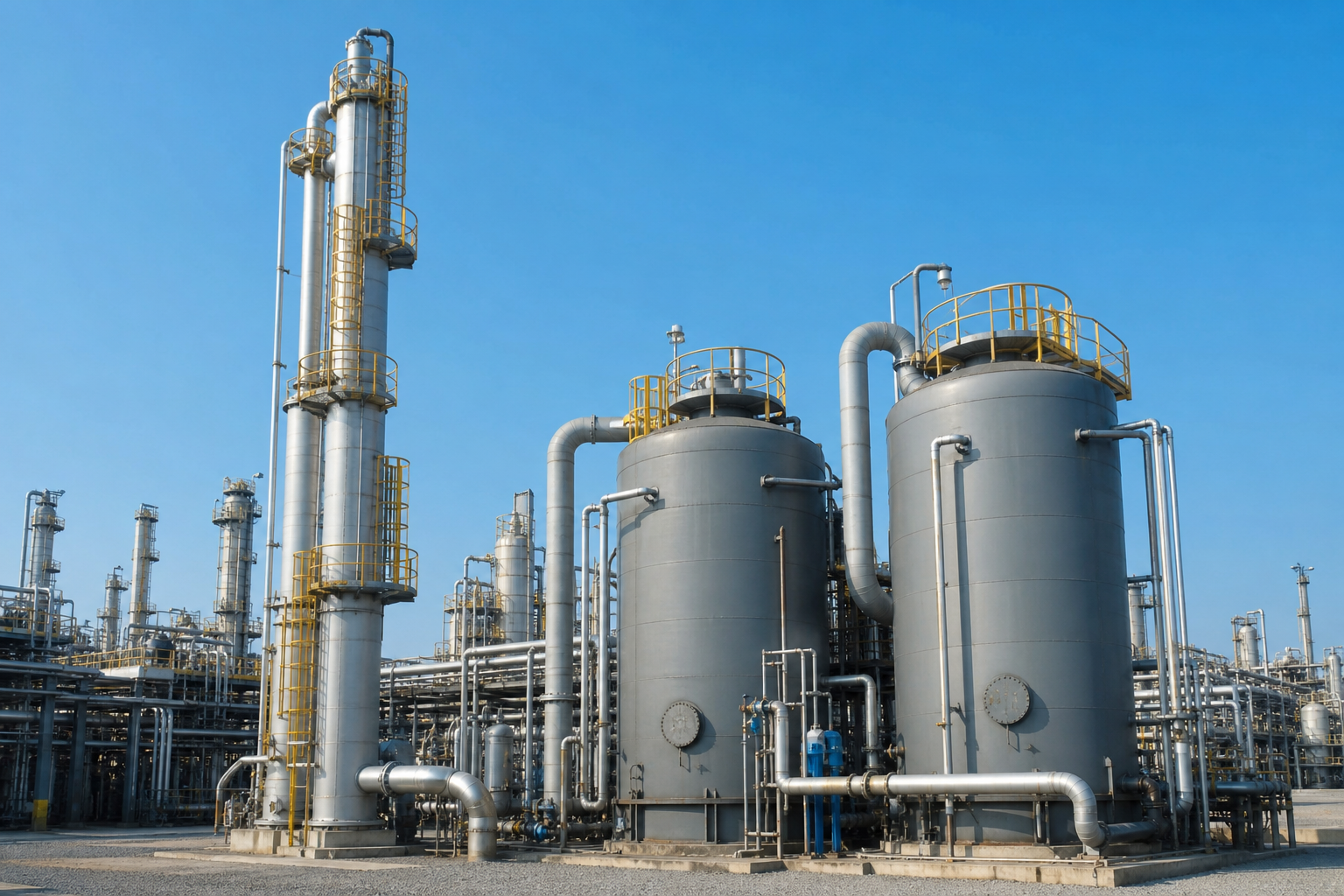
The stripping tower dominates the layout and is oriented for safe vapor routing to the off-gas unit. Carbon adsorbers and the oxidizer sit immediately downstream of the tower's vapor outlet; liquid GAC polishes at grade.
Electrical area classification and continuous gas monitoring are applied around the stripper and off-gas block.
- 01Pretreatment
- 02Stripping
- 03Vapor Control
- 04Water Polishing
What WFS delivers
- 1VOC / BTEX speciation & design basis
- 2Stripper & off-gas system sizing
- 3Air-emission compliance review
- 4Fabricated stripper, carbon & oxidizer units
- 5Installation, E&I & area classification
- 6Commissioning, stack & water performance test
- 7O&M, carbon-change & monitoring program
From study to continuous O&M
- 01Study & Assess
- 02Characterize Water
- 03Custom Design
- 04Pilot & Trial
- 05Detailed Engineering
- 06Equipment Design
- 07Fabricate
- 08Deliver to Site
- 09Construct
- 10Electrical & Automation
- 11Continuous O&M
Discuss your VOC removal from wastewater project
Share your stream data and target specification — WFS will characterize the water and propose a custom train.