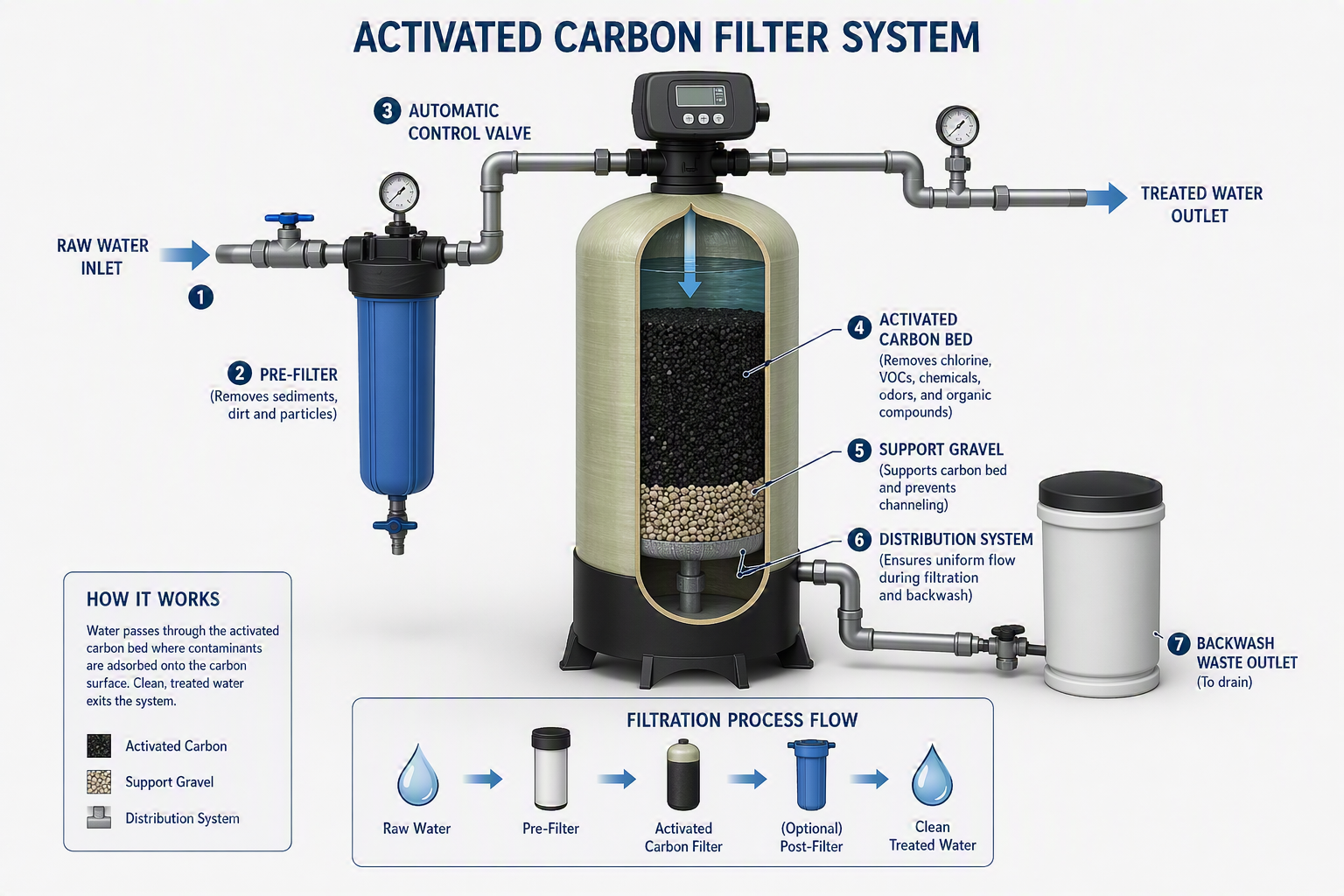
Activated Carbon Adsorption GAC
Broad-spectrum organics polishing. High-surface-area carbon that adsorbs trace hydrocarbons, BTEX, colour and refractory organics — the broad-spectrum organic polishing stage.
System Schematic
Representative process-flow — configured to your streamUnderlying Technology & Scientific Principle
Granular activated carbon (GAC) provides 800–1,500 m²/g of internal pore surface. Dissolved organics partition from water onto the carbon by physical adsorption and weak chemical interactions until breakthrough, at which point the bed is replaced or thermally regenerated.
Working Mechanism
Pre-filtered water flows down through packed GAC vessels. Organic molecules diffuse into the pore network and adsorb on the carbon surface. Service runs are governed by an empty-bed contact time (EBCT) sized to the adsorption isotherm and target effluent concentration.
Separation / Removal Efficiency
BTEX, phenols and dissolved hydrocarbons reduced to <10 µg/L; colour and TOC removal 70–95%; chlorine fully removed within seconds of contact.
Operating Principle & Parameters
EBCT 10–30 min; surface loading 5–15 m/h; pressure drop 0.3–1.0 bar; ambient temperature; backwash 30–50 m/h every 1–7 days.
Flow Rates & Volumetric Capacities
From <1 m³/h polishing skids to multi-vessel trains of several hundred m³/h; lead-lag arrangement to maximise carbon utilisation.
Fluid Media Compatibility
Coal-, coconut- or wood-based GAC in lined steel or FRP vessels with underdrain laterals; specialty carbons available for mercury and selenium.
System Schematic & Process Integration
Downstream of MMF/UF as final organic polish, upstream of RO for dechlorination, or as a stand-alone trace-organics removal stage.
Options / Variations Available
Virgin or reactivated GAC; coal, coconut or wood base; specialty impregnated carbons for Hg, Se and H₂S removal.
System Complexity & Automation Level
Medium — automated backwash and differential-pressure monitoring; carbon change-out triggered by effluent TOC or target-analyte breakthrough.
Applications & Performance Delivered
Refinery effluent polishing
Final removal of BTEX, phenols and dissolved hydrocarbons before discharge or reuse.
Dechlorination
Removes free and combined chlorine to protect downstream RO membranes.
Specialty contaminants
Impregnated carbons capture mercury, selenium and trace H₂S.
Contaminant Removal Profile
Continue exploring the train
 Tertiary
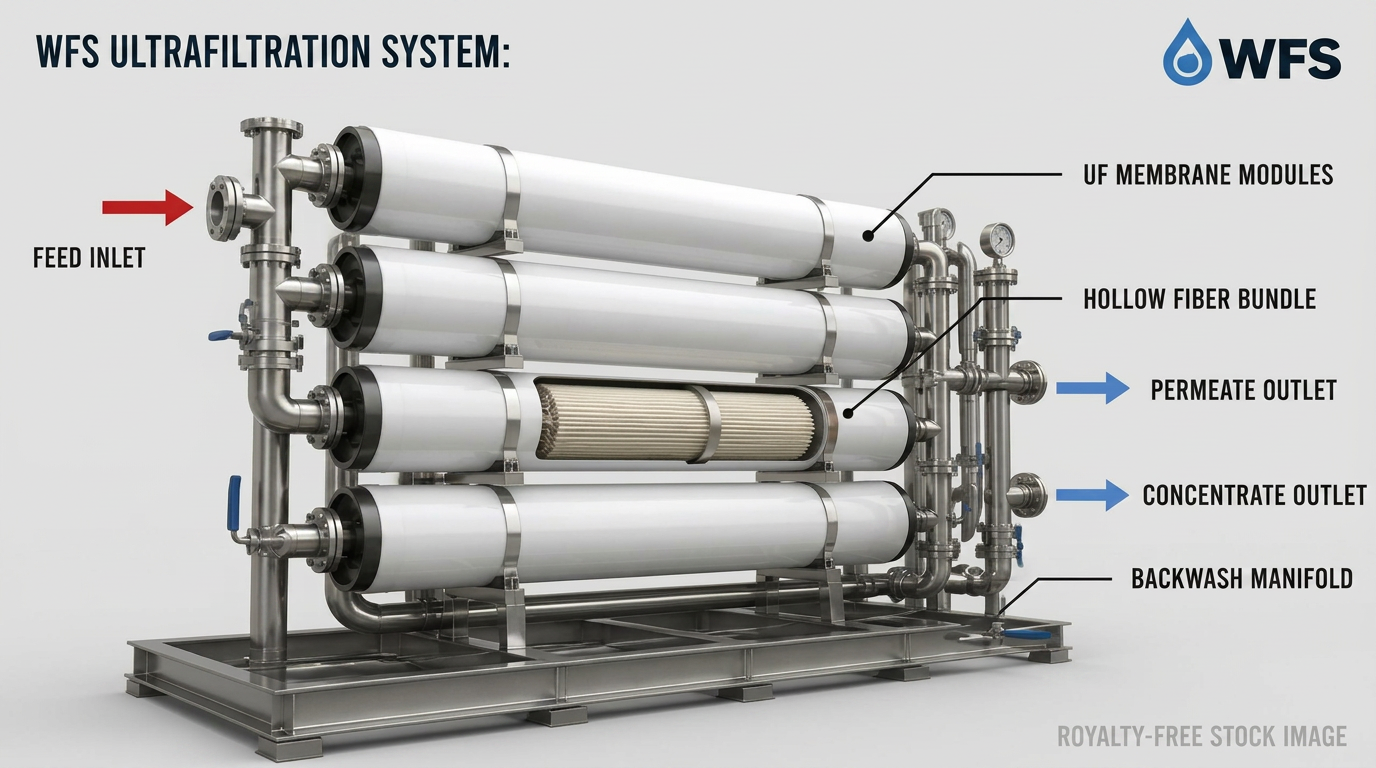
Ultrafiltration
UFPressure-driven membranes (0.01–0.1 µm) that deliver an absolute barrier to suspended solids, oil, bacteria and viruses — the modern RO pre-treatment standard.
Explore technology →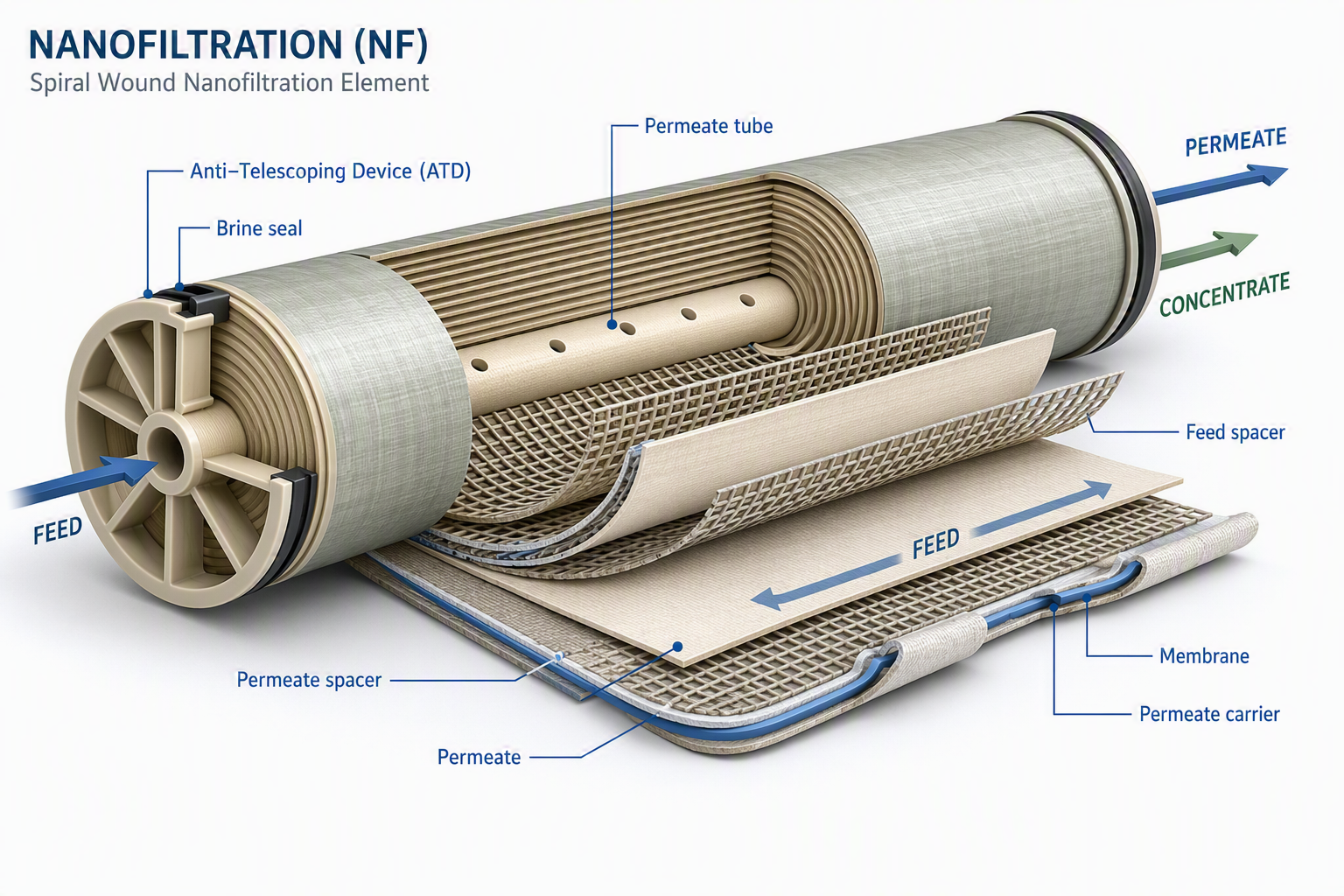 Tertiary
Nanofiltration
NFLoose membranes (0.001–0.01 µm) that selectively reject divalent ions, hardness, colour and micro-pollutants while passing much of the monovalent salt.
Explore technology →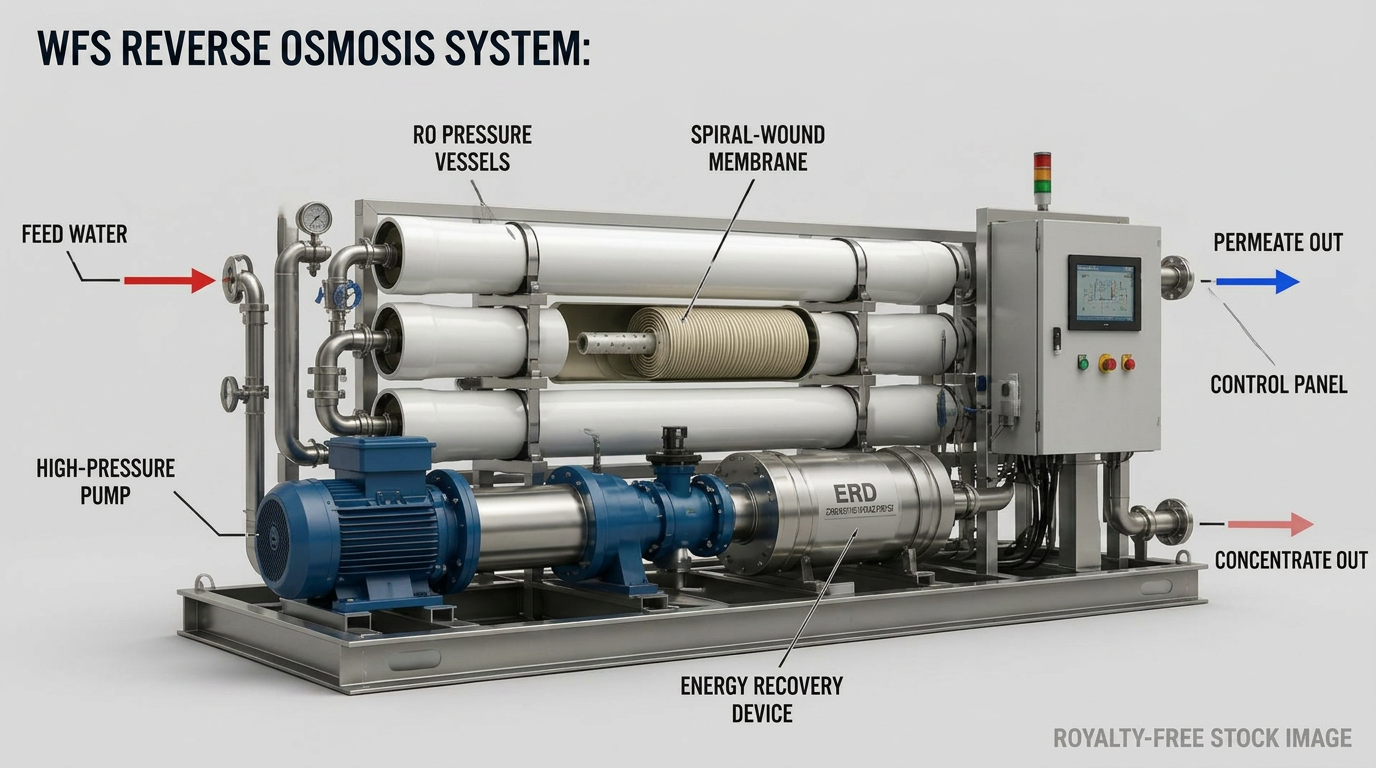 Tertiary
Reverse Osmosis
ROHigh-pressure semi-permeable membranes that reject dissolved salts and organics to produce near-pure permeate — the backbone of desalination, reuse and ZLD.
Explore technology →