Ion Exchange IX
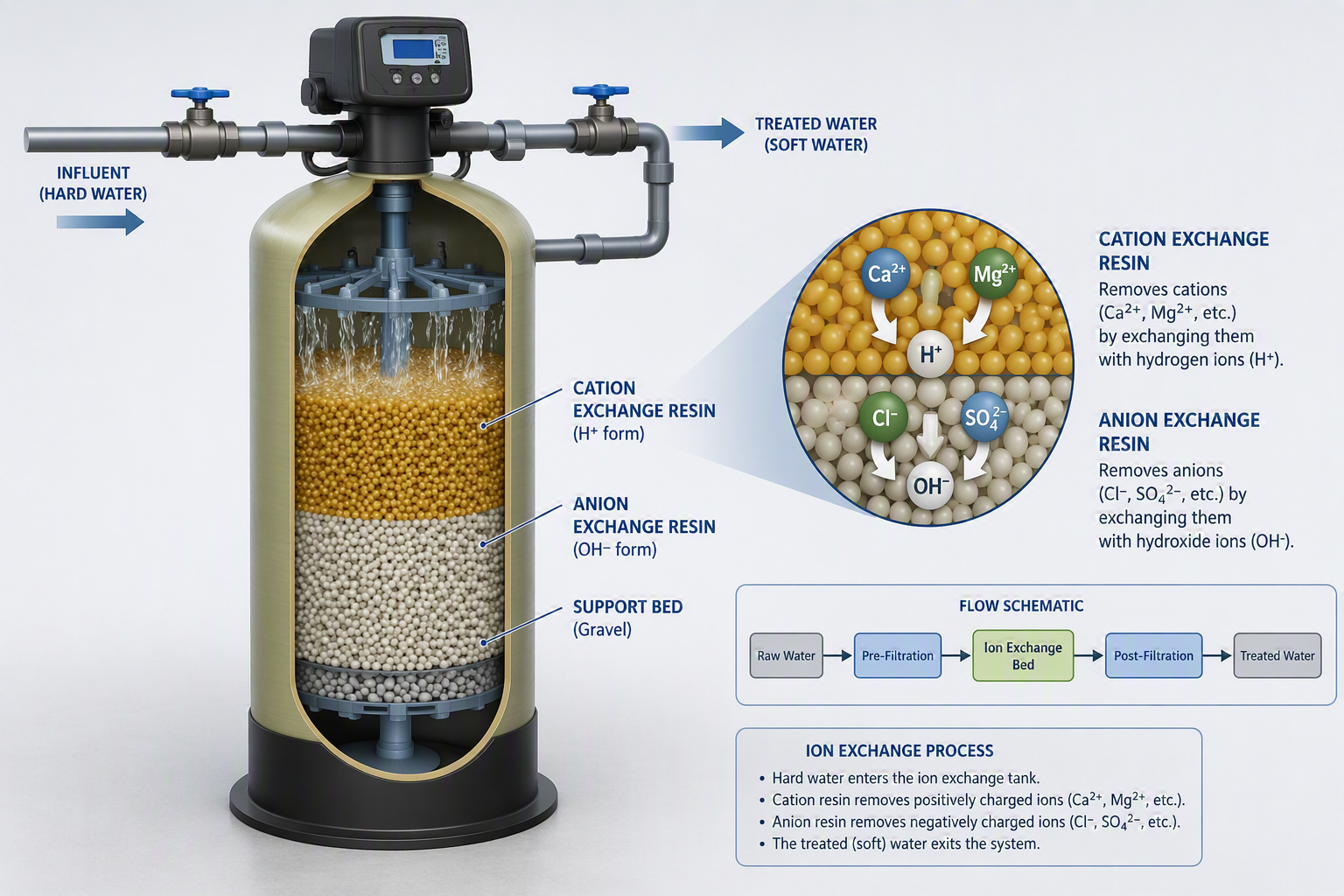
Selective ion removal to ultra-low levels. Selective resin beds that swap unwanted ions for benign ones — delivering softening, demineralisation and trace heavy-metal capture to ultra-low levels.
System Schematic
Representative process-flow — configured to your streamUnderlying Technology & Scientific Principle
Ion exchange uses functionalised polymeric resins that reversibly swap mobile ions on the resin matrix for target ions in the water. Once exhausted, resin is regenerated chemically (acid, caustic or brine) and returned to service.
Working Mechanism
Feed water flows through packed resin beds — cation resins remove hardness and metal ions, anion resins remove anions such as nitrate, sulphate and silica, and mixed/chelating resins polish to trace levels. Spent resin is regenerated in place by counter-current chemical pass.
Separation / Removal Efficiency
Hardness <0.1 mg/L as CaCO₃; demineralised water <0.1 µS/cm; heavy metals (Pb, Cu, Ni, Zn) to <10 µg/L with selective chelating resins.
Operating Principle & Parameters
Service flow 15–40 BV/h; regeneration 2–8 BV at 4–10% chemical strength; pressure drop 0.3–1.5 bar; ambient temperature; feed TSS <5 mg/L and free of oxidants.
Flow Rates & Volumetric Capacities
From small polishing skids (<5 m³/h) to large twin-train demin plants of several hundred m³/h; lead-lag or working/standby configurations.
Fluid Media Compatibility
Strong/weak acid cation, strong/weak base anion, mixed-bed and selective chelating resins in lined steel or FRP vessels with distributor internals.
System Schematic & Process Integration
Downstream of RO/UF as polishing for ultra-pure water, boiler feed, or as a stand-alone softener/heavy-metal scavenger on lightly loaded streams.
Options / Variations Available
Softening, dealkalisation, demineralisation (two-bed or mixed-bed), condensate polishing, selective heavy-metal or boron removal.
System Complexity & Automation Level
High — automated regeneration sequencing by throughput or conductivity break-through, with chemical dosing, rinse-to-drain and effluent monitoring.
Applications & Performance Delivered
Boiler feedwater polishing
Removes residual hardness and silica downstream of RO.
Heavy-metal removal
Chelating resin captures Pb, Cu, Ni and Zn to discharge limits.
Condensate polishing
Protects steam circuits from corrosion-product carry-over.
Contaminant Removal Profile
Continue exploring the train
 Tertiary
Ultrafiltration
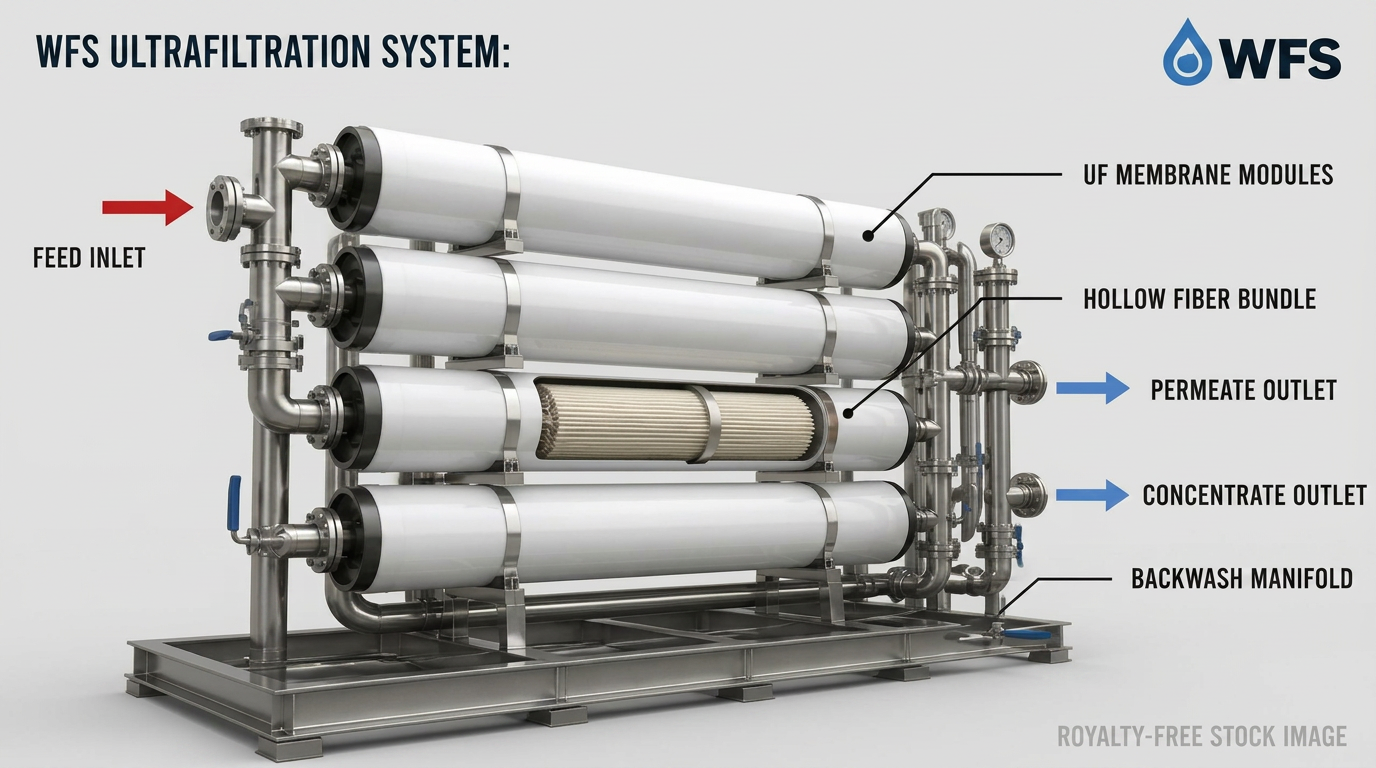
UFPressure-driven membranes (0.01–0.1 µm) that deliver an absolute barrier to suspended solids, oil, bacteria and viruses — the modern RO pre-treatment standard.
Explore technology →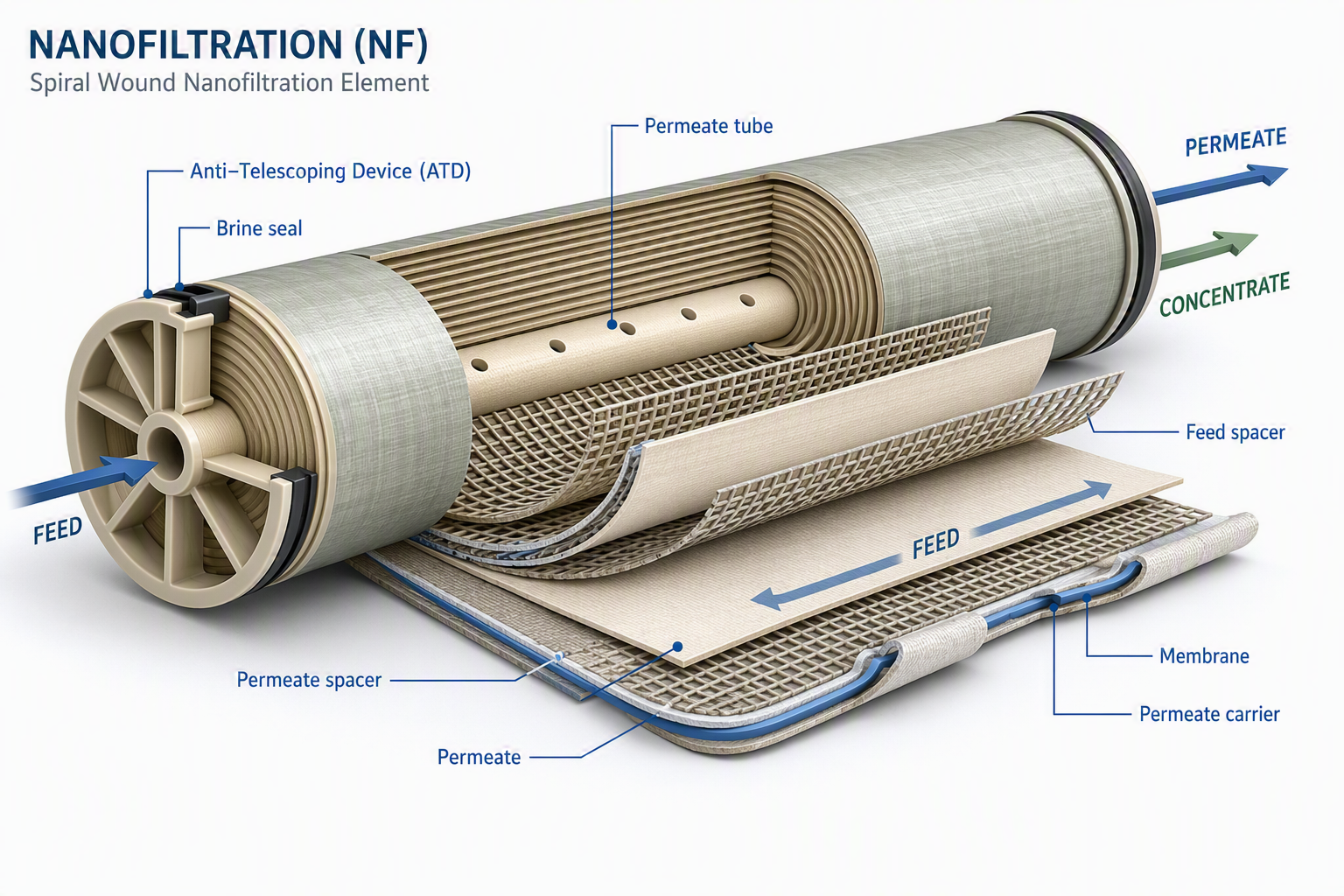 Tertiary
Nanofiltration
NFLoose membranes (0.001–0.01 µm) that selectively reject divalent ions, hardness, colour and micro-pollutants while passing much of the monovalent salt.
Explore technology →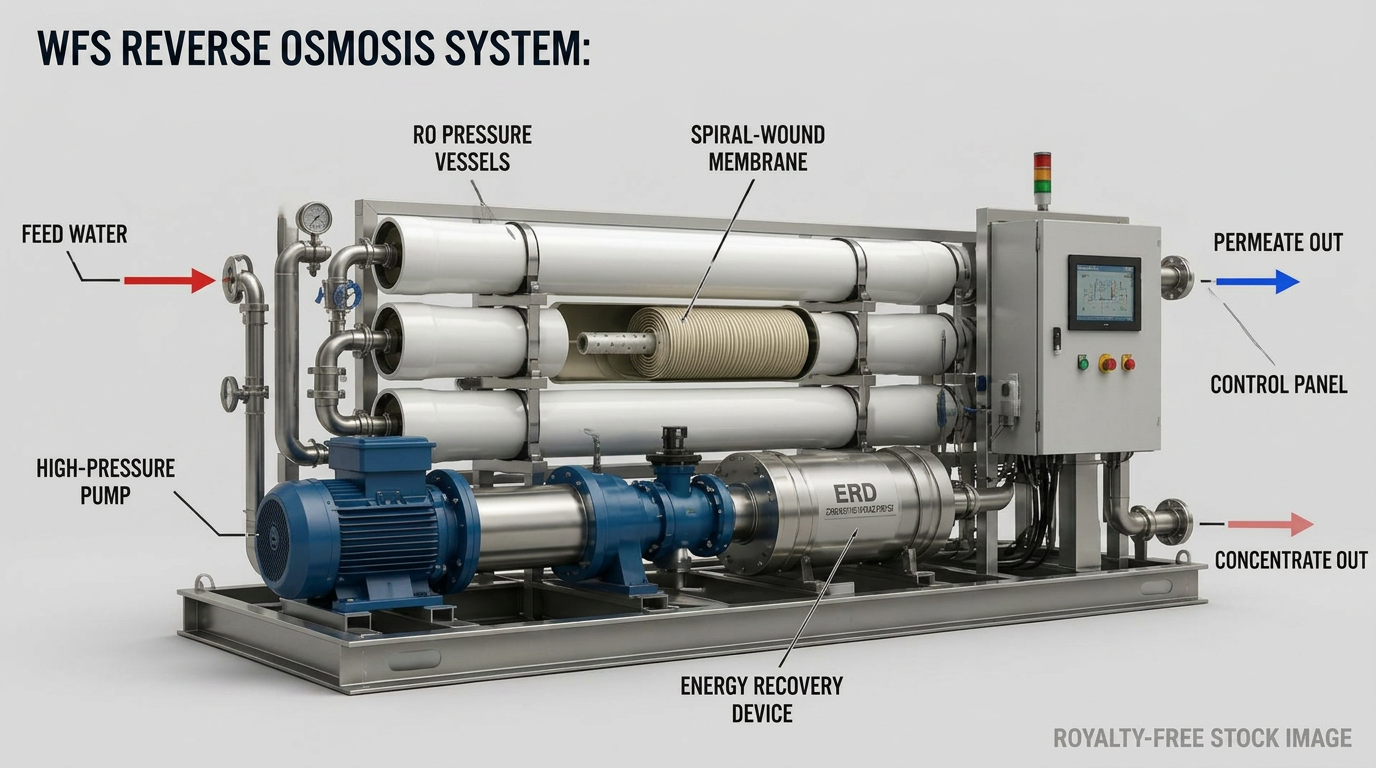 Tertiary
Reverse Osmosis
ROHigh-pressure semi-permeable membranes that reject dissolved salts and organics to produce near-pure permeate — the backbone of desalination, reuse and ZLD.
Explore technology →