Wet Scrubbers WS
Gas absorption & particulate capture. Gas–liquid contact towers that neutralise sour and acid gases and capture particulate — bridging water treatment and emissions control for stripped-gas and vent streams.
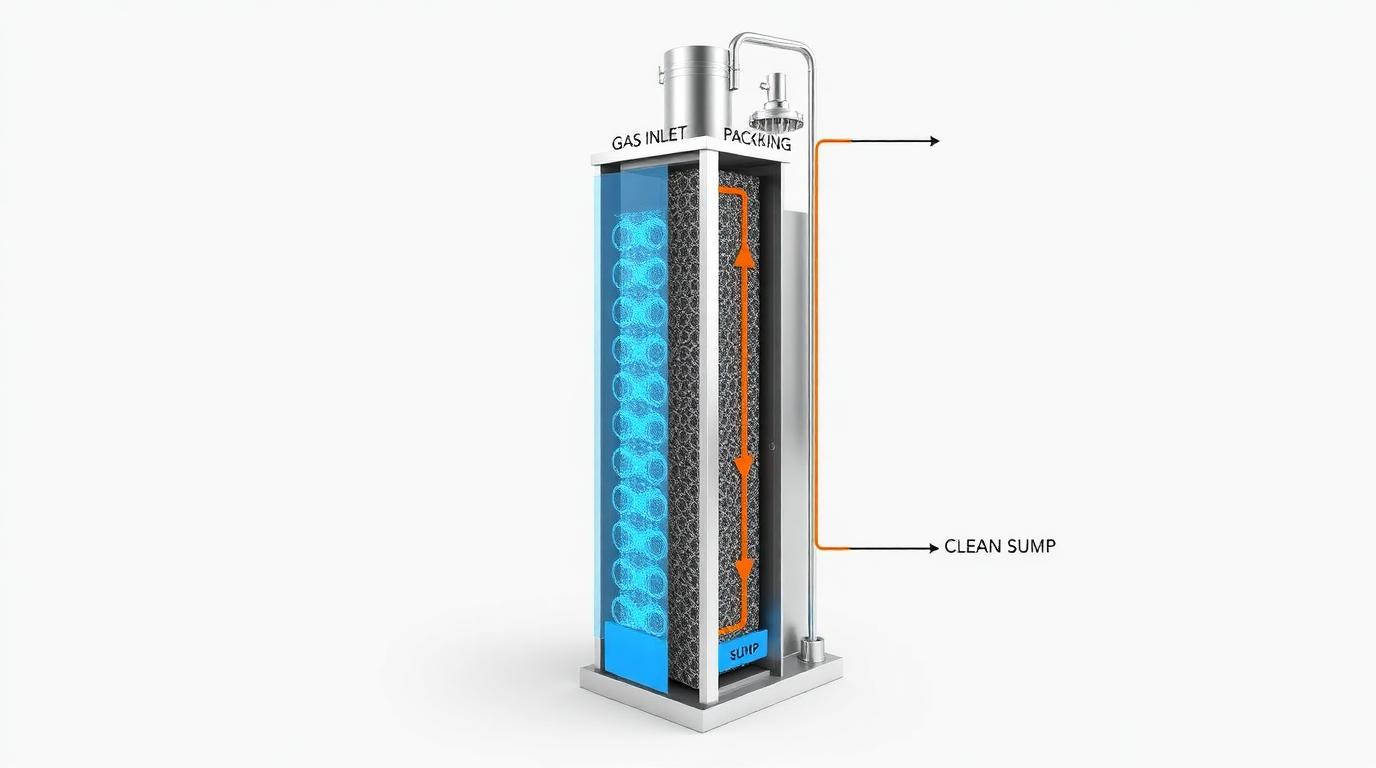
System Schematic
Representative process-flow — configured to your streamUnderlying Technology & Scientific Principle
Wet scrubbing brings a contaminated gas into intimate contact with a scrubbing liquor — water, caustic or oxidant solution. Soluble gases (H₂S, SO₂, HCl, NH₃) absorb into the liquid and react chemically, while particulate is captured by inertial impaction on droplets.
Working Mechanism
Gas enters a packed or spray tower and flows counter-current to recirculated scrubbing liquor. Mass transfer occurs across the packing surface; reagent dosing maintains pH/ORP set-points. Spent liquor blow-down is sent to treatment and fresh make-up replenishes the loop.
Separation / Removal Efficiency
Acid-gas removal 95–99.5%; particulate >95% for >2 µm with venturi/high-energy designs; outlet H₂S <5 ppmv with caustic/oxidant scrubbing.
Operating Principle & Parameters
Gas velocity 1.5–3 m/s; L/G ratio 1–10 L/m³; pressure drop 5–25 mbar (packed), up to 100 mbar (venturi); ambient to 80 °C.
Flow Rates & Volumetric Capacities
From small vent scrubbers (<1,000 Nm³/h) to large flue-gas units (>100,000 Nm³/h); single- or multi-stage configurations.
Fluid Media Compatibility
FRP or alloy tower with structured/random packing; mist eliminators; recirculation pumps and reagent dosing on caustic or hypochlorite.
System Schematic & Process Integration
Treats vents from sour-water strippers, tanks, sumps and process equipment; bridges liquid-phase treatment and air-emissions compliance.
Options / Variations Available
Packed tower, spray tower, venturi, multi-stage; water, caustic, hypochlorite or chelated-iron scrubbing chemistries.
System Complexity & Automation Level
High — pH, ORP, level and blow-down automated with reagent dosing trim and emissions monitoring at the stack.
Applications & Performance Delivered
Sour-gas vent treatment
Captures H₂S from tank and stripper vents.
Acid-gas emissions
Removes SO₂, HCl and Cl₂ from process off-gas.
Particulate control
Polishes flue gas from incinerators and dryers.
Contaminant Removal Profile
Continue exploring the train
 Tertiary
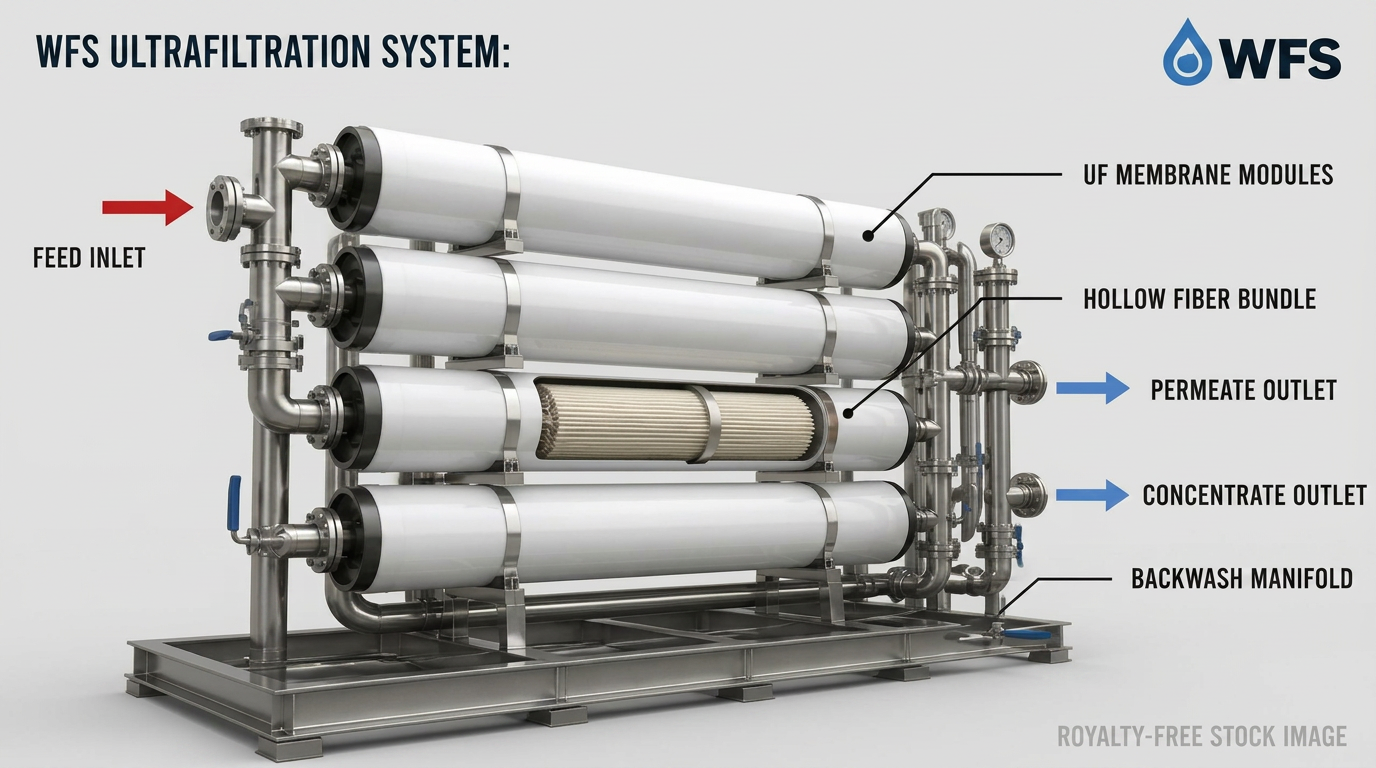
Ultrafiltration
UFPressure-driven membranes (0.01–0.1 µm) that deliver an absolute barrier to suspended solids, oil, bacteria and viruses — the modern RO pre-treatment standard.
Explore technology →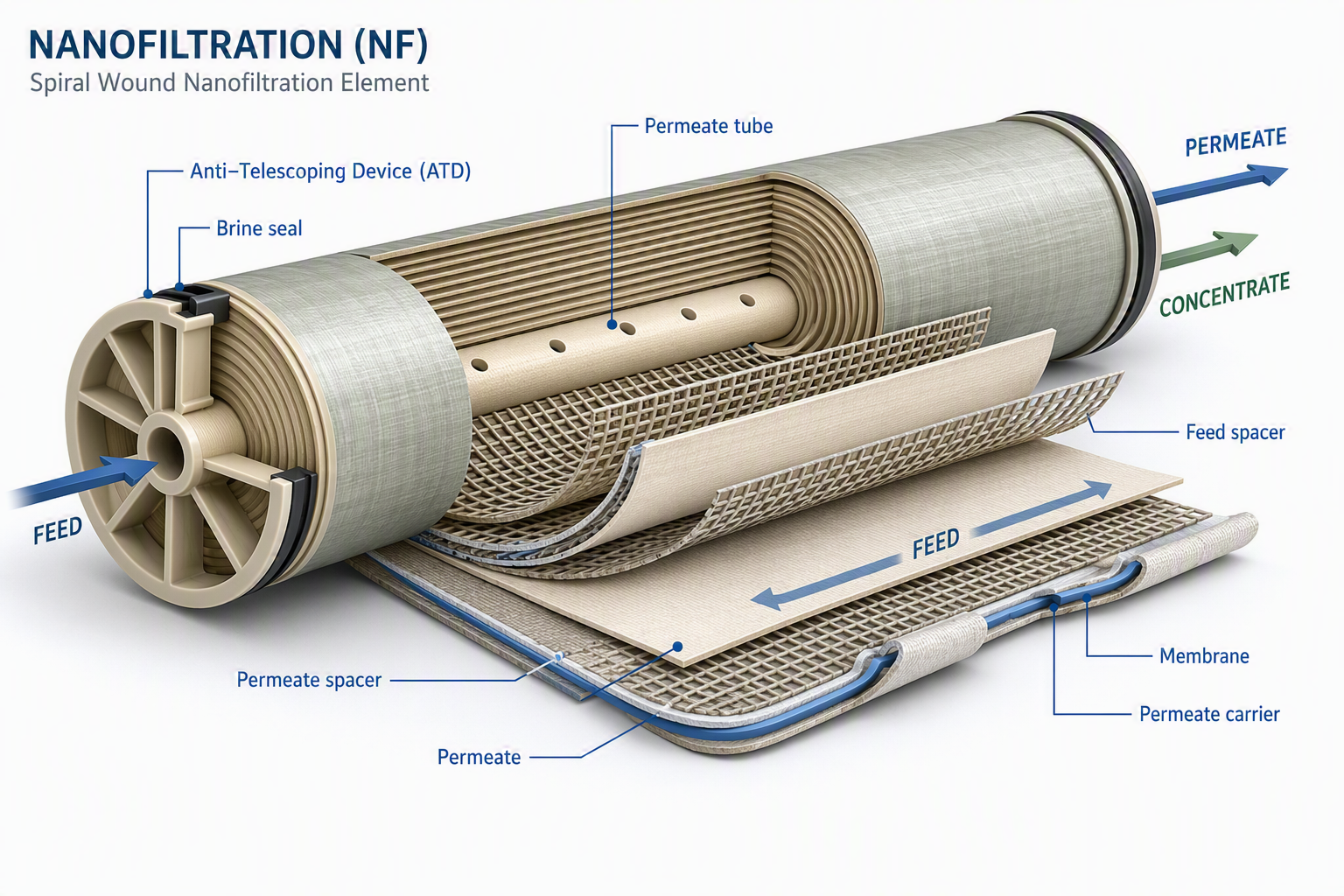 Tertiary
Nanofiltration
NFLoose membranes (0.001–0.01 µm) that selectively reject divalent ions, hardness, colour and micro-pollutants while passing much of the monovalent salt.
Explore technology →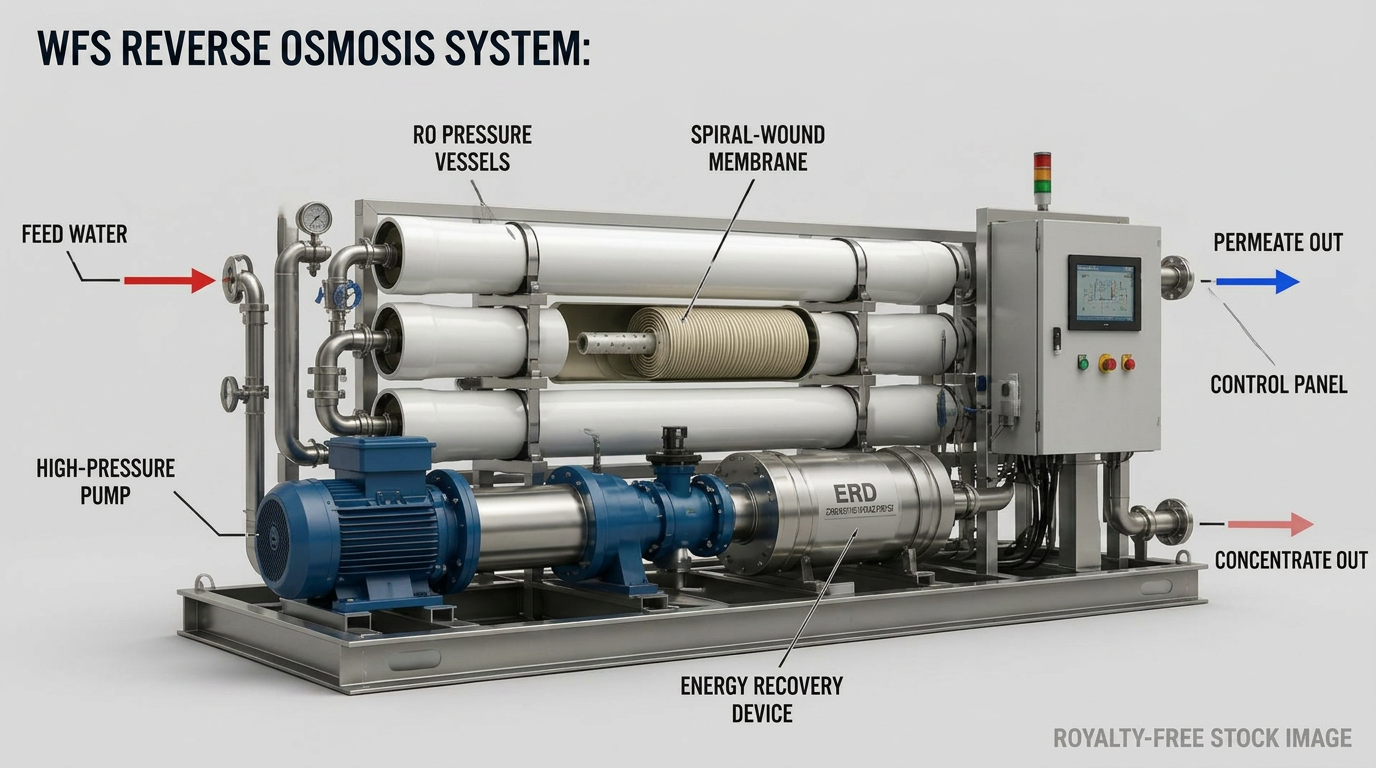 Tertiary
Reverse Osmosis
ROHigh-pressure semi-permeable membranes that reject dissolved salts and organics to produce near-pure permeate — the backbone of desalination, reuse and ZLD.
Explore technology →