NGL Fractionation Process Water
Treatment of caustic wash blowdown (pH 12–14), high BOD/COD, sulfide, and mercaptan contamination from NGL deethanizers, depropanizers, and debutanizers.
Overview
Treatment of caustic wash blowdown (pH 12–14), high BOD/COD, sulfide, and mercaptan contamination from NGL deethanizers, depropanizers, and debutanizers.
Challenge
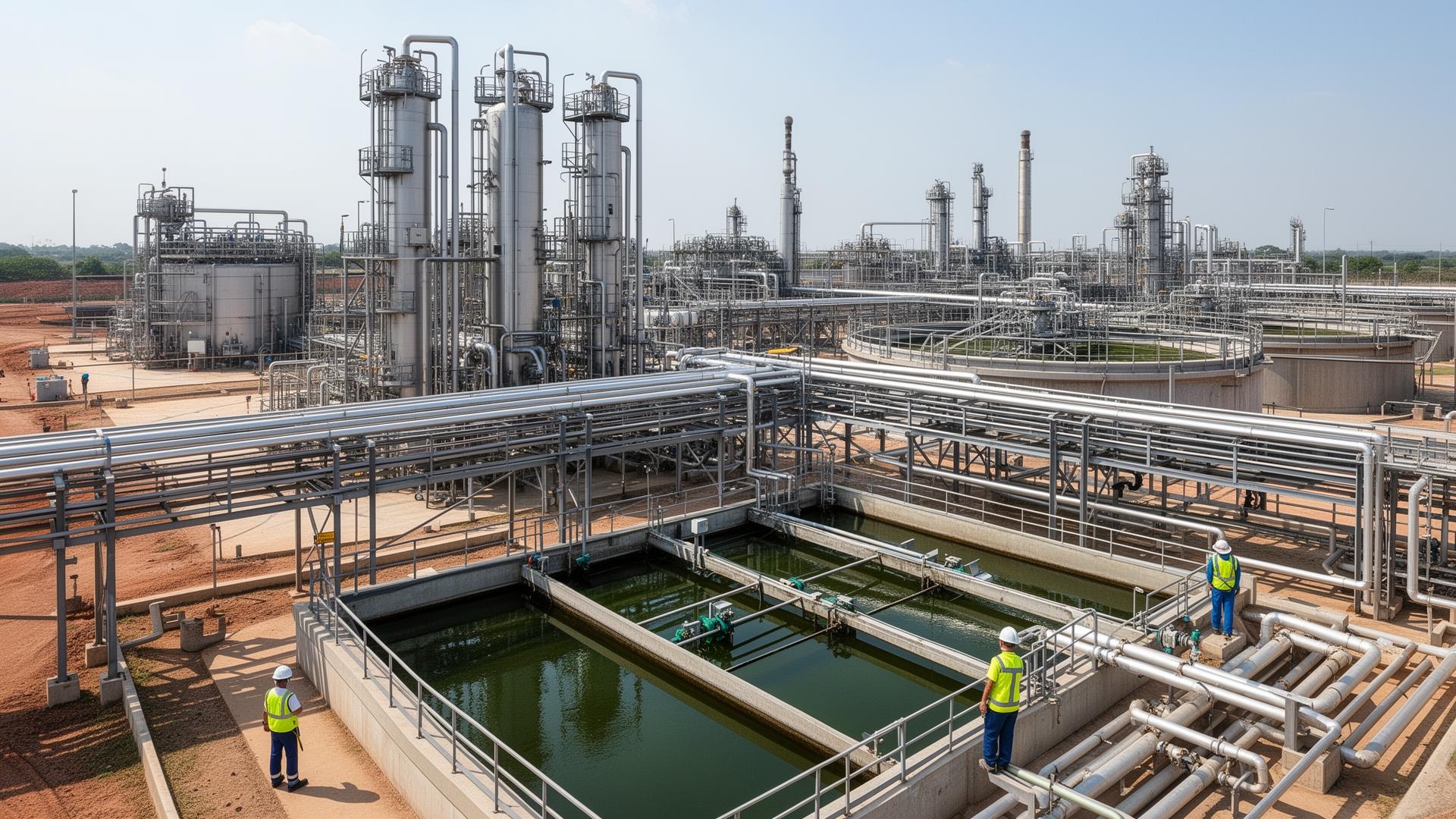
NGL fractionation plants (deethanizers, depropanizers, debutanizers) produce wastewater from condensate dehydration, caustic washing operations, and tank drainage. Caustic wash wastewater from depropanizers is highly alkaline (pH 12–14) with high BOD/COD, sulfide, and mercaptan contamination requiring specialized treatment before disposal.
WFS Solution
WFS NGL wastewater treatment systems neutralize caustic wash blowdown, oxidize sulfides and mercaptans using wet air oxidation or catalytic oxidation, and treat the resulting stream through biological treatment and final polishing. Segregated treatment trains handle high-strength caustic streams separately from general plant drainage.
Technologies Applied
- ▸Caustic Neutralization
- ▸Wet Air Oxidation (WAO)
- ▸Catalytic Oxidation
- ▸Biological Treatment (SBR)
- ▸Stripping Columns
- ▸Final Polishing Filtration
Outcomes
- ✓Sulfide oxidation >99.9%
- ✓pH neutralization to 6.5–8.5
- ✓BOD / COD reduction >98%
- ✓Mercaptan removal to odorant detection limits
Discuss This Application
Share your water analysis, constraints, and discharge or reuse goals — WFS will propose the right treatment path.