Corrugated Plate Interceptor CPI
Enhanced-gravity plate-pack separation. Inclined corrugated-plate pack that shortens the distance an oil droplet must rise — delivering API-class separation in a fraction of the footprint.
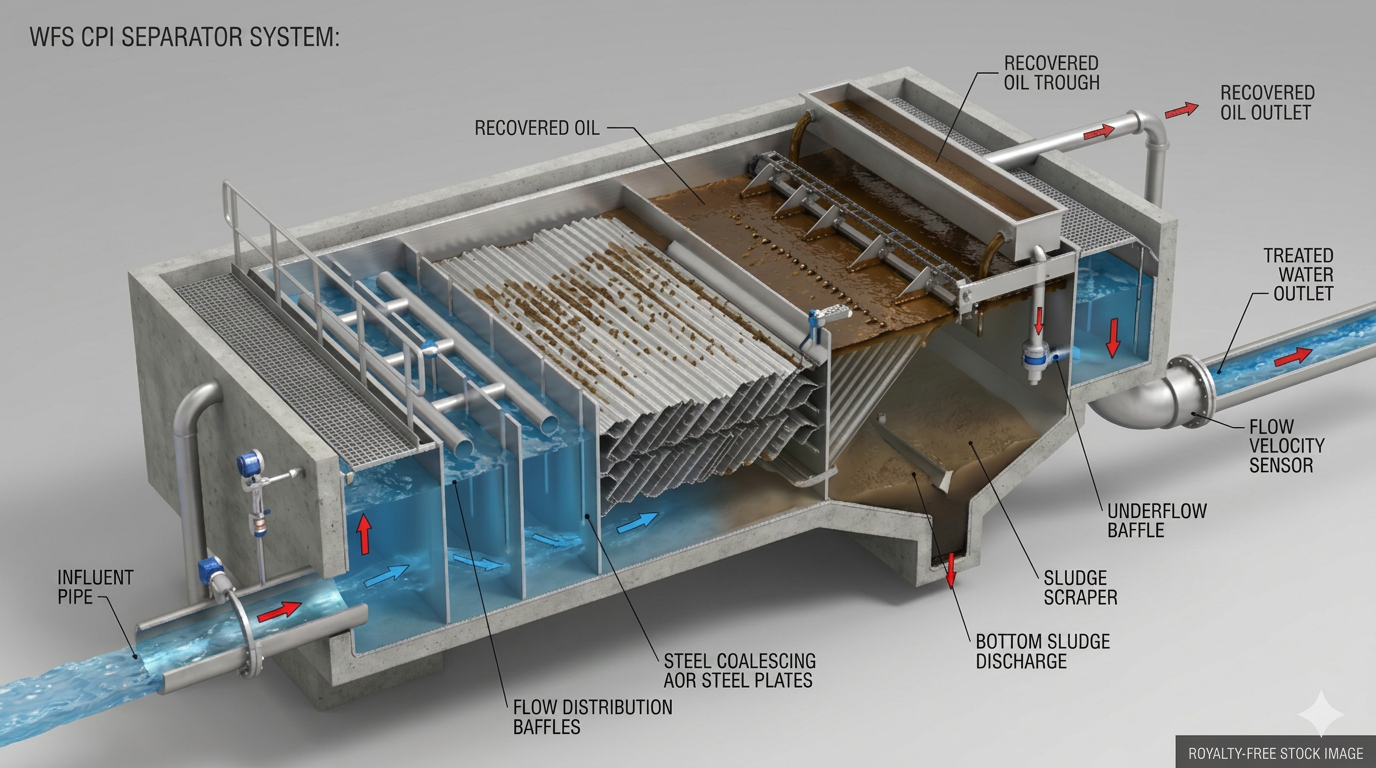
System Schematic
Representative process-flow — configured to your streamUnderlying Technology & Scientific Principle
CPI (also called a parallel- or tilted-plate interceptor) applies the same Stokes' gravity separation as an API unit, but a closely spaced corrugated plate pack cuts the vertical rise distance to a few millimetres, dramatically accelerating droplet capture and coalescence.
Working Mechanism
Water flows between oleophilic corrugated plates inclined at 45–60°. Oil droplets rise the short gap to the underside of a plate, coalesce along the corrugation crests into a film, and migrate up to the surface oil layer; solids slide down the troughs to a sludge hopper.
Separation / Removal Efficiency
Removes free oil down to ~60 µm, achieving 10–50 mg/L oil-and-grease — significantly better than a bare API basin in the same area.
Operating Principle & Parameters
Plate spacing 6–20 mm, projected-area loading 0.3–0.6 m/h. Performance governed by plate angle, spacing and feed temperature (lower viscosity improves rise rate).
Flow Rates & Volumetric Capacities
Modular packs handle 10–400 m³/h per vessel; multiple packs paralleled for higher flow. Compact enough for skid and offshore deck mounting.
Fluid Media Compatibility
Polypropylene, PVDF or 316L plate packs in CS, FRP or stainless vessels. Suited to hot, saline and moderately sour produced and process water.
System Schematic & Process Integration
Installed downstream of an API separator or as the primary de-oiler on space-constrained sites, ahead of flotation, walnut-shell or membrane stages.
Options / Variations Available
Cross-flow vs. down-flow packs; removable cassettes for cleaning; optional inlet coalescer and gas-blanketed (sour-service) vessels.
System Complexity & Automation Level
Low–moderate — interface level control and automated oil draw; plate packs periodically isolated for chemical or mechanical wash.
Applications & Performance Delivered
Offshore & onshore produced water
Deck-mounted de-oiling where footprint and weight are critical.
Refinery oily-water polishing
Second-stage separation after API to meet downstream feed limits.
Tank-cleaning & slop streams
Recovers oil from high-strength intermittent batches.
Contaminant Removal Profile
Continue exploring the train
 Primary
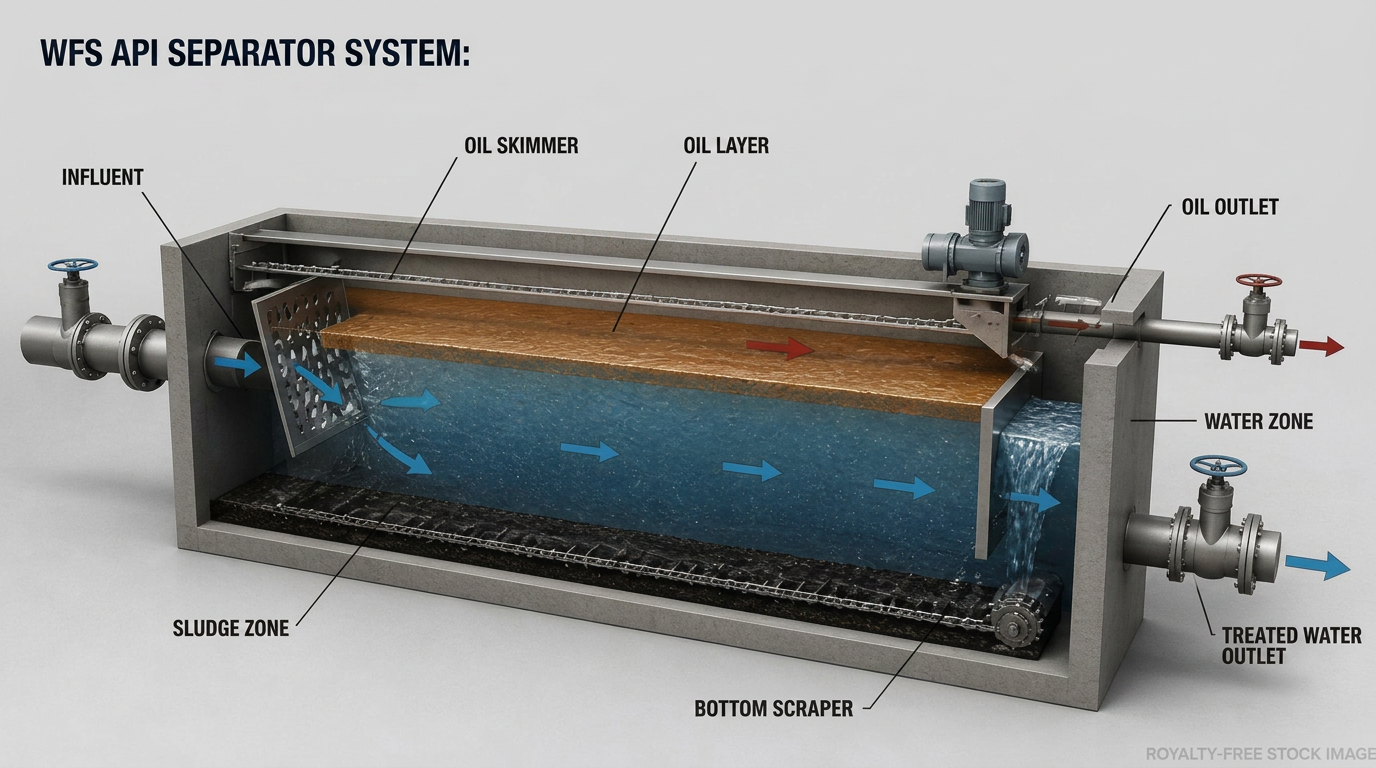
API Separator
APIGravity-based rectangular basin that separates bulk free oil, settleable solids and water by density difference — the robust first stage of nearly every oily-water train.
Explore technology →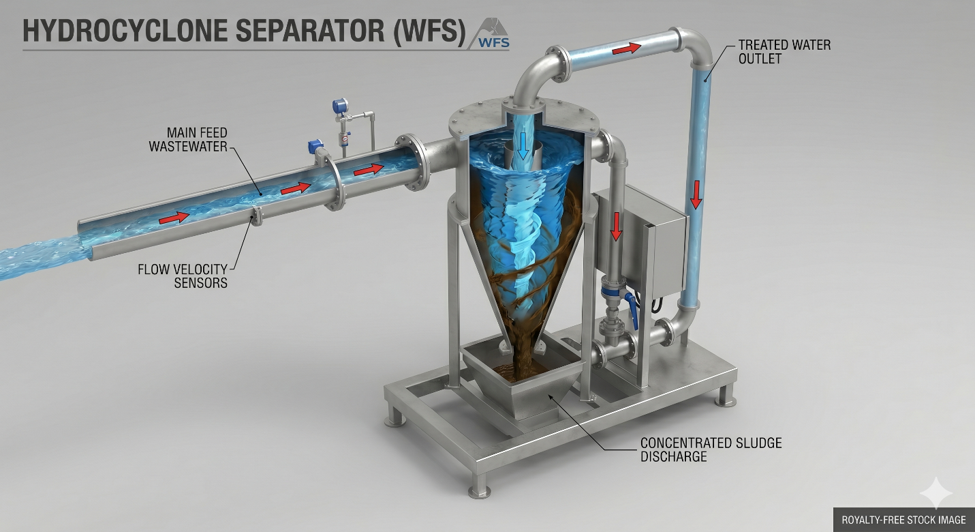 Primary
Hydrocyclones
HCStatic centrifugal de-oilers that spin produced water at thousands of g — separating dispersed oil with no moving parts in a compact, deck-friendly package.
Explore technology →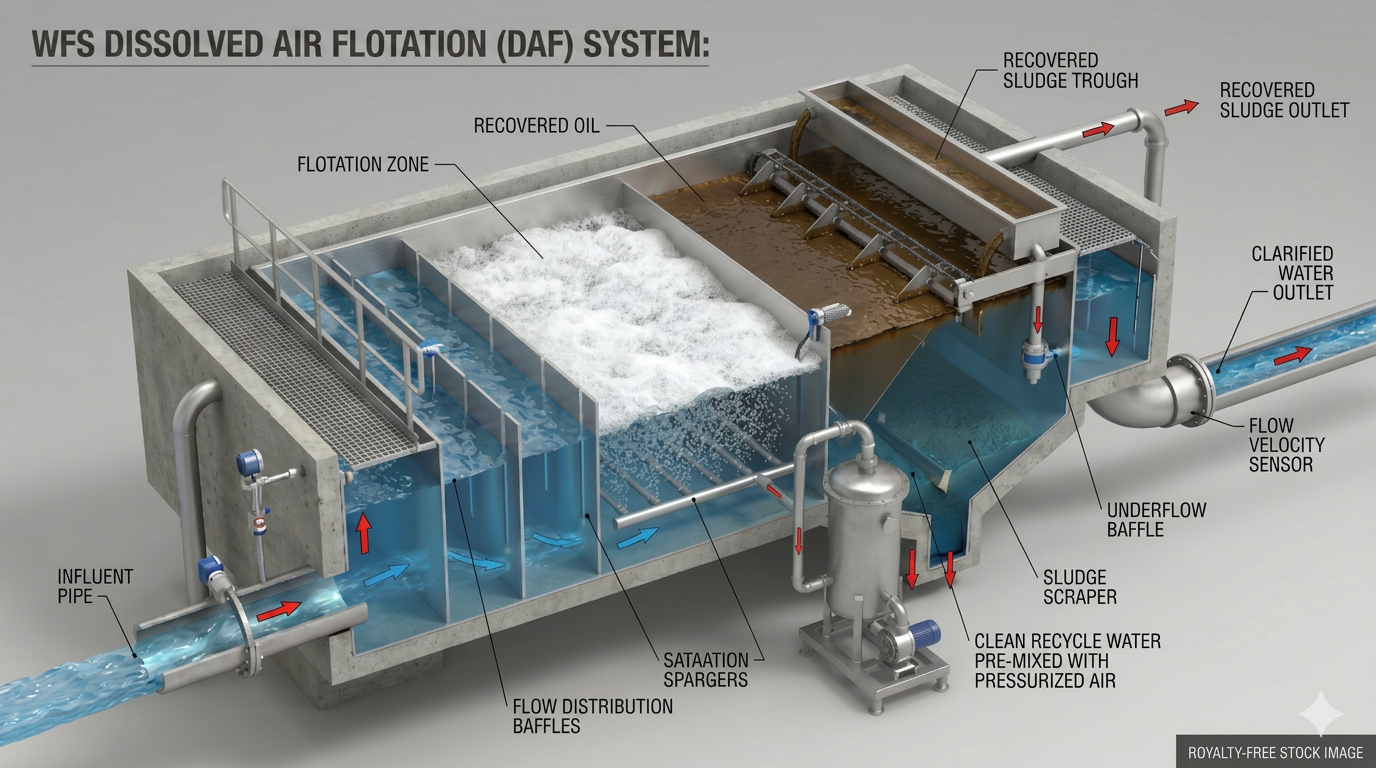 Secondary
Dissolved Air Flotation
DAFMicro-bubble flotation that lifts emulsified oil, light solids and chemical floc to the surface — the workhorse secondary de-oiler for emulsified streams.
Explore technology →