Electro-oxidation EO
Chemical-free anodic destruction of refractory organics. Direct anodic oxidation at dimensionally stable electrodes that destroys refractory organics and ammonia in high-salinity brines — chemical-free advanced oxidation.
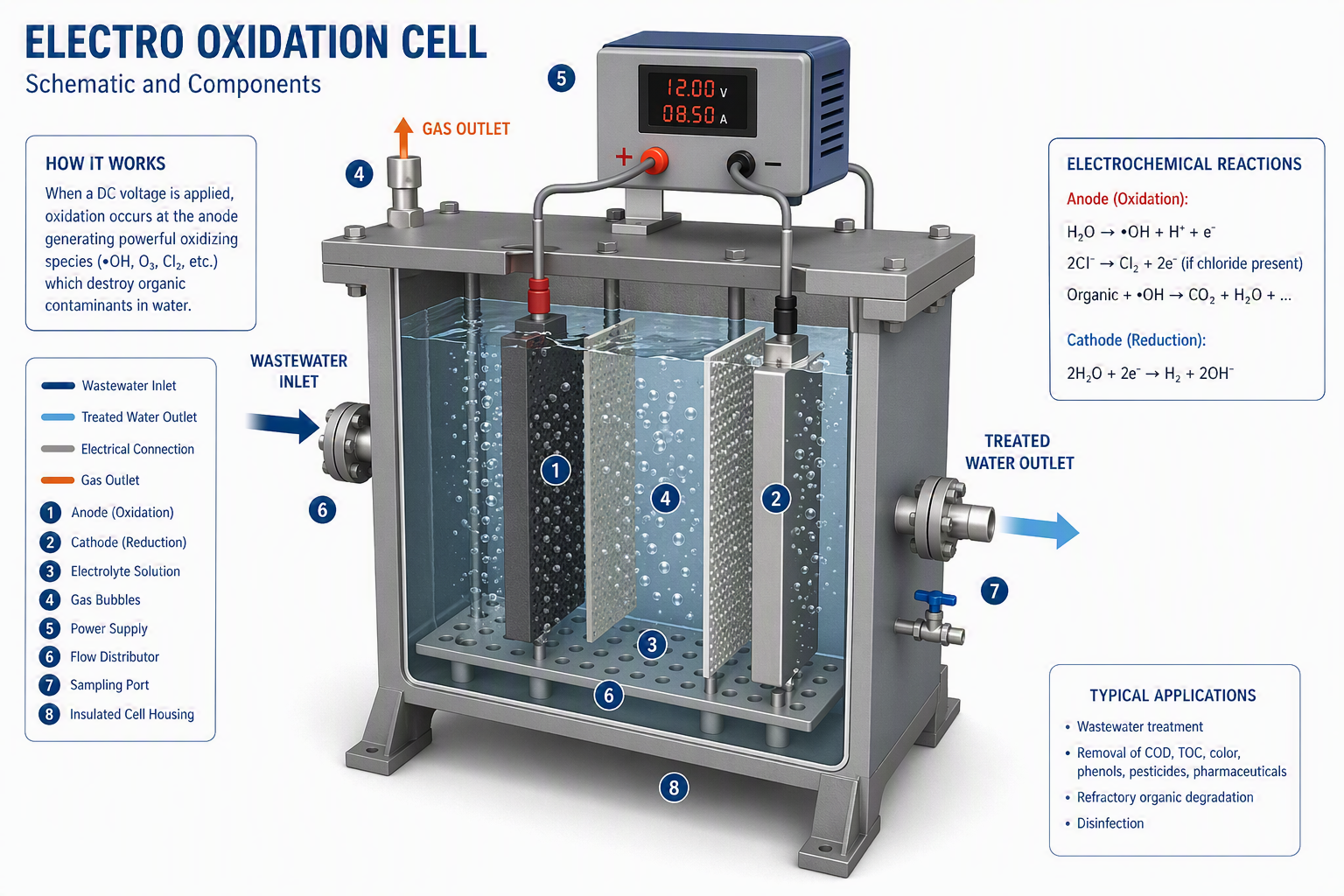
System Schematic
Representative process-flow — configured to your streamUnderlying Technology & Scientific Principle
Electro-oxidation (EO) drives current between dimensionally stable anodes (BDD, Ti/IrO₂, Ti/RuO₂) and cathodes immersed in the wastewater. At the anode surface, water is oxidised to hydroxyl radicals and, in chloride-bearing brines, active chlorine species — both attacking organics directly and indirectly.
Working Mechanism
Boron-doped diamond (BDD) anodes give the highest oxidation potential and near-complete mineralisation; mixed-metal-oxide (MMO) anodes are cost-effective for chloride-mediated oxidation. The process simultaneously destroys COD, ammonia (via breakpoint chlorination) and pathogens, with no chemical addition.
Separation / Removal Efficiency
COD removal 70–98%; ammonia removal >95%; >6 log disinfection; mineralisation of PFAS, phenols, dyes and pharmaceuticals demonstrated on BDD.
Operating Principle & Parameters
Current density 100–1000 A/m²; cell voltage 3–10 V; specific energy 5–50 kWh/m³ depending on target; effective across pH 2–10; salinity >1 g/L Cl⁻ enhances efficiency.
Flow Rates & Volumetric Capacities
Stackable electrochemical cells from 1 m³/h pilot to >500 m³/h industrial; modular plate-and-frame or tubular reactor designs.
Fluid Media Compatibility
BDD, Ti/IrO₂, Ti/RuO₂ or Ti/PbO₂ anodes; stainless-steel or Ti cathodes; rectifier and DC power supply; optional gas-collection hood for H₂.
System Schematic & Process Integration
RO concentrate treatment, landfill leachate, produced-water polishing, refinery wastewater, hospital and pharmaceutical effluents.
Options / Variations Available
BDD for full mineralisation; MMO (IrO₂/RuO₂) for chloride-mediated oxidation; PbO₂ for cost-sensitive duties; coupling with UV (photo-electro) or H₂O₂ (electro-Fenton).
System Complexity & Automation Level
High — current/voltage control, conductivity and ORP feedback, polarity reversal for self-cleaning, full SCADA with energy optimisation.
Applications & Performance Delivered
RO concentrate destruction
Mineralises concentrated organics and ammonia in high-salinity brine.
Landfill leachate
Destroys refractory COD and ammonia in a single chemical-free step.
Produced-water polishing
Oxidises residual hydrocarbons and disinfects without biocide addition.
Contaminant Removal Profile
Continue exploring the train
 Polishing
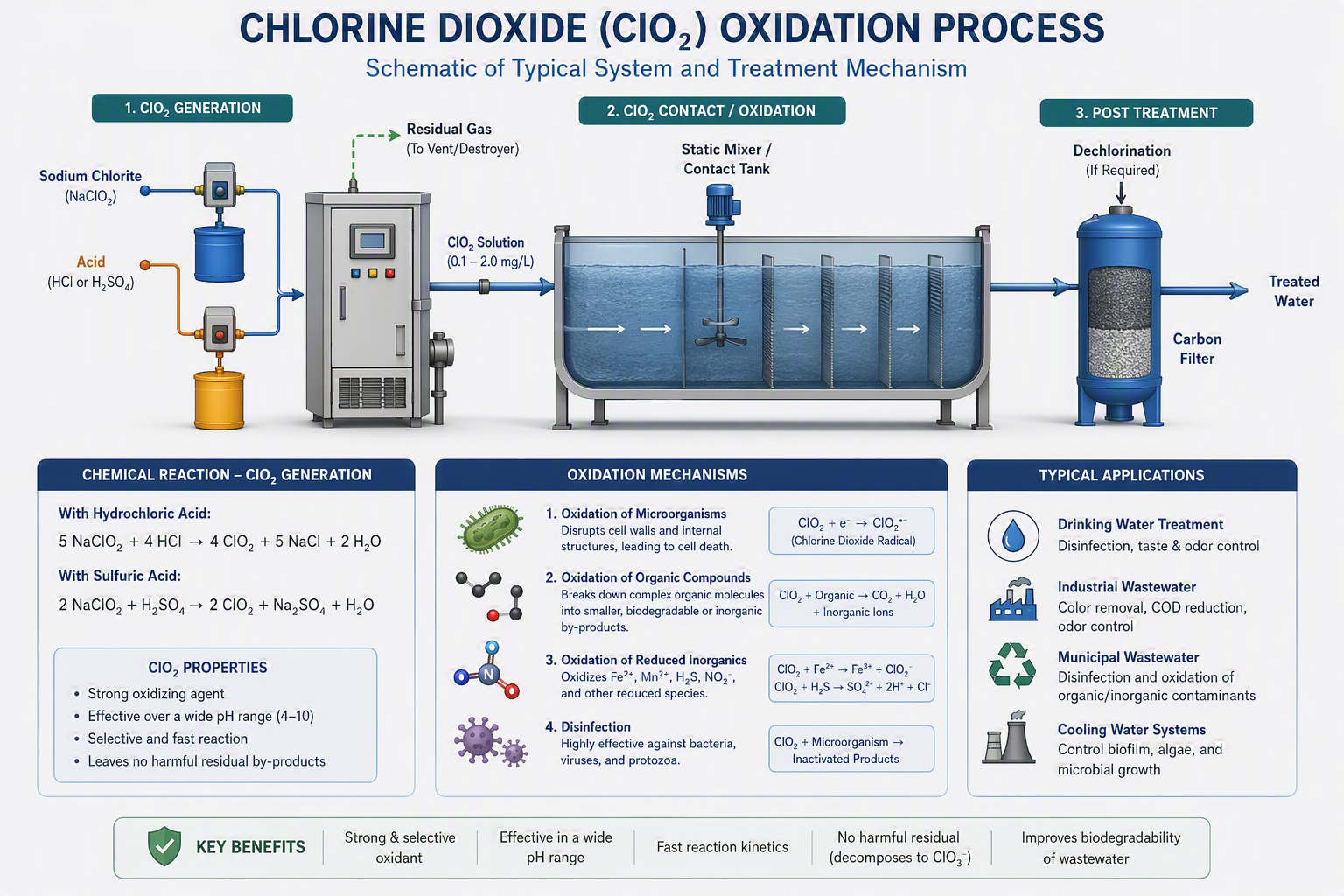
Chlorine Dioxide (ClO₂) Treatment
ClO₂A powerful selective oxidant and biocide dosed on-site — controls biofouling and oxidises sulphides without forming chlorinated by-products.
Explore technology →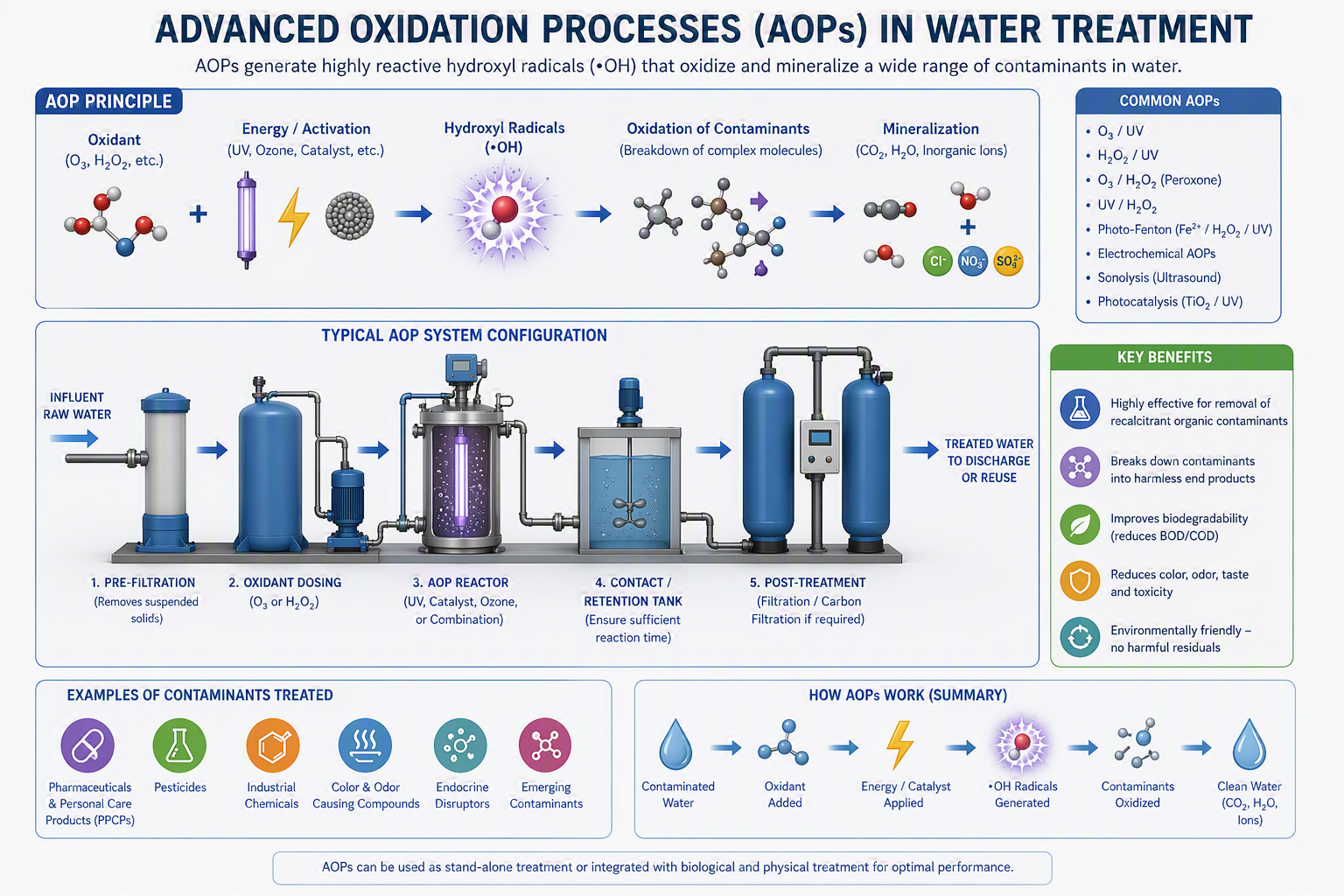 Polishing
Advanced Oxidation Processes
AOPHydroxyl-radical generation (UV/ozone/peroxide/Fenton) that destroys the most persistent organics outright — mineralising what other processes only transfer.
Explore technology →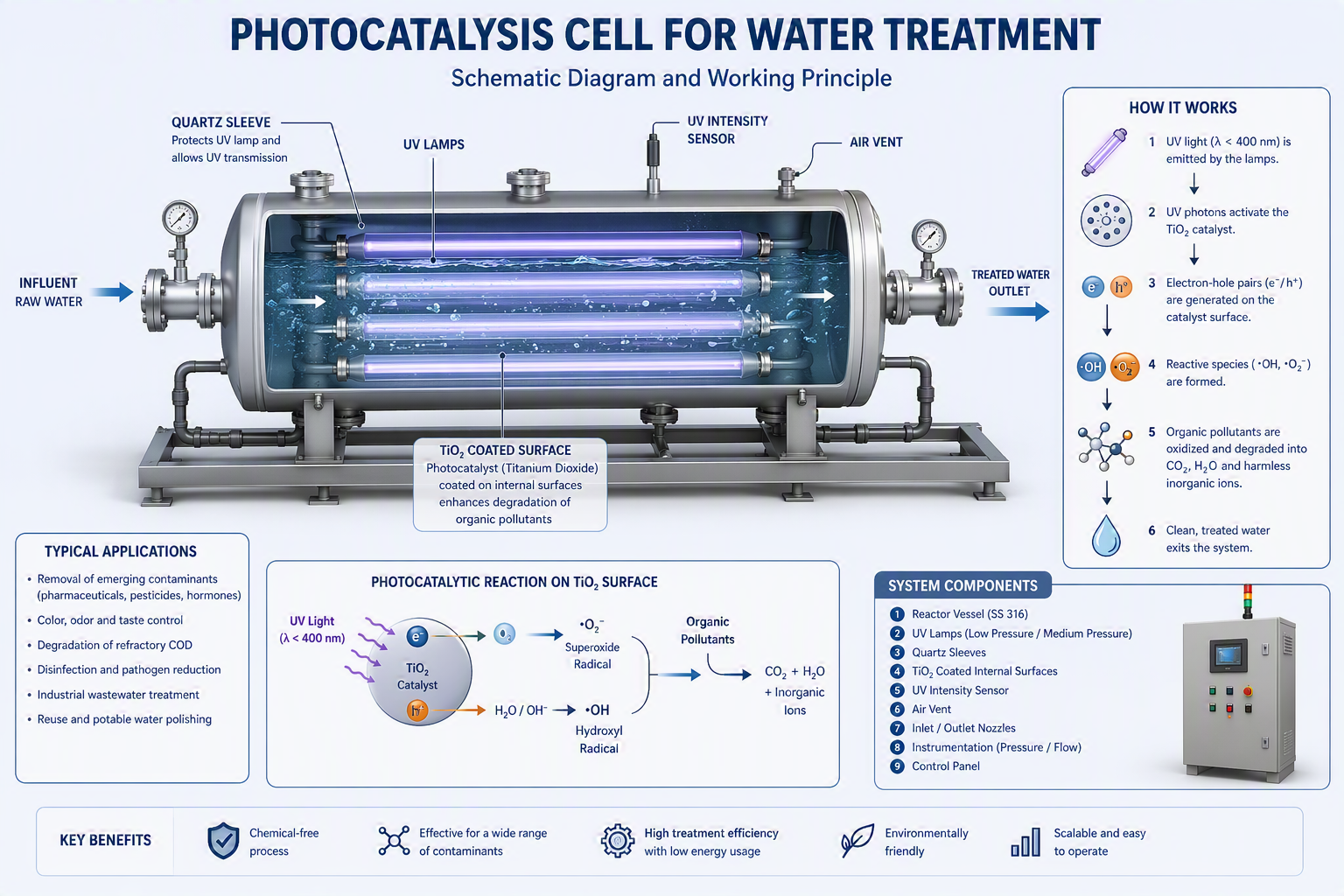 Polishing
Photocatalysis
PCUV-activated semiconductor catalysts (TiO₂) that generate reactive radicals from light — a green advanced-oxidation route that breaks down complex organics.
Explore technology →