
Photocatalysis PC
UV-activated TiO₂ destruction of complex organics. UV-activated semiconductor catalysts (TiO₂) that generate reactive radicals from light — a green advanced-oxidation route that breaks down complex organics.
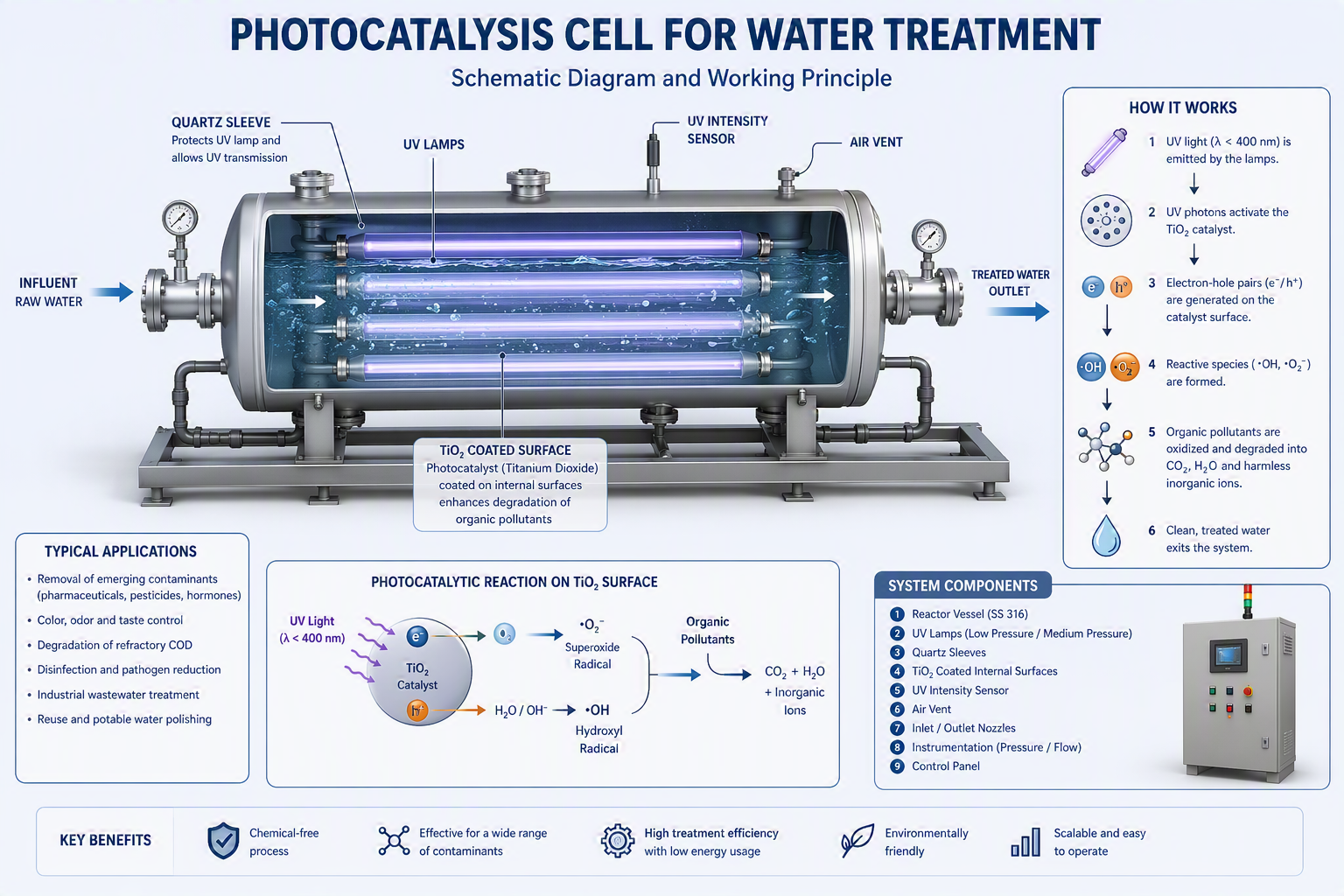
System Schematic
Representative process-flow — configured to your streamUnderlying Technology & Scientific Principle
Photocatalysis uses a semiconductor catalyst — most commonly titanium dioxide (TiO₂) — illuminated by UV-A light (λ < 388 nm). Photons with energy above the bandgap promote electrons from the valence to the conduction band, creating electron-hole pairs that react with adsorbed water and oxygen to generate hydroxyl radicals and superoxide.
Working Mechanism
The radicals attack organic contaminants adsorbed on the catalyst surface, mineralising them to CO₂ and water. TiO₂ is deployed as a slurry (with downstream membrane recovery) or as a fixed coating on supports, glass beads or membrane surfaces. Visible-light catalysts (N-doped TiO₂, WO₃, g-C₃N₄) extend the active spectrum into solar wavelengths.
Separation / Removal Efficiency
Refractory organic destruction 70–95%; effective on dyes, pesticides, pharmaceuticals, endocrine disruptors and BTEX; co-benefit disinfection 3–5 log.
Operating Principle & Parameters
Catalyst loading 0.1–1 g/L (slurry) or fixed coating; UV-A intensity 1–20 mW/cm²; pH 3–9; dissolved O₂ required as electron acceptor; contact 10–120 min.
Flow Rates & Volumetric Capacities
Annular UV reactors, falling-film, slurry-loop or solar collector arrays — from lab/pilot scale to full plant; commonly retrofit into existing UV trains.
Fluid Media Compatibility
Anatase or anatase/rutile TiO₂ (P25 reference), N-doped TiO₂ for visible light; immobilised on glass, ceramics, polymer films or membrane surfaces.
System Schematic & Process Integration
Polishing after biological treatment, micropollutant removal in tertiary reuse, textile-dye effluent treatment, landfill-leachate detox.
Options / Variations Available
Slurry vs immobilised; UV-A vs solar (visible-light catalyst); coupling with O₃, H₂O₂, electrochemistry or membrane separation.
System Complexity & Automation Level
Medium — UV-intensity feedback, lamp-hour monitoring, catalyst recovery membranes (slurry systems) with backpulse cleaning.
Applications & Performance Delivered
Textile-dye polishing
Decolourises and mineralises azo and reactive dyes resistant to biology.
Micropollutant removal
Destroys endocrine disruptors and pharmaceuticals in tertiary reuse.
Solar detox
Uses solar UV in remote sites for chemical-free organic destruction.
Contaminant Removal Profile
Continue exploring the train
 Polishing
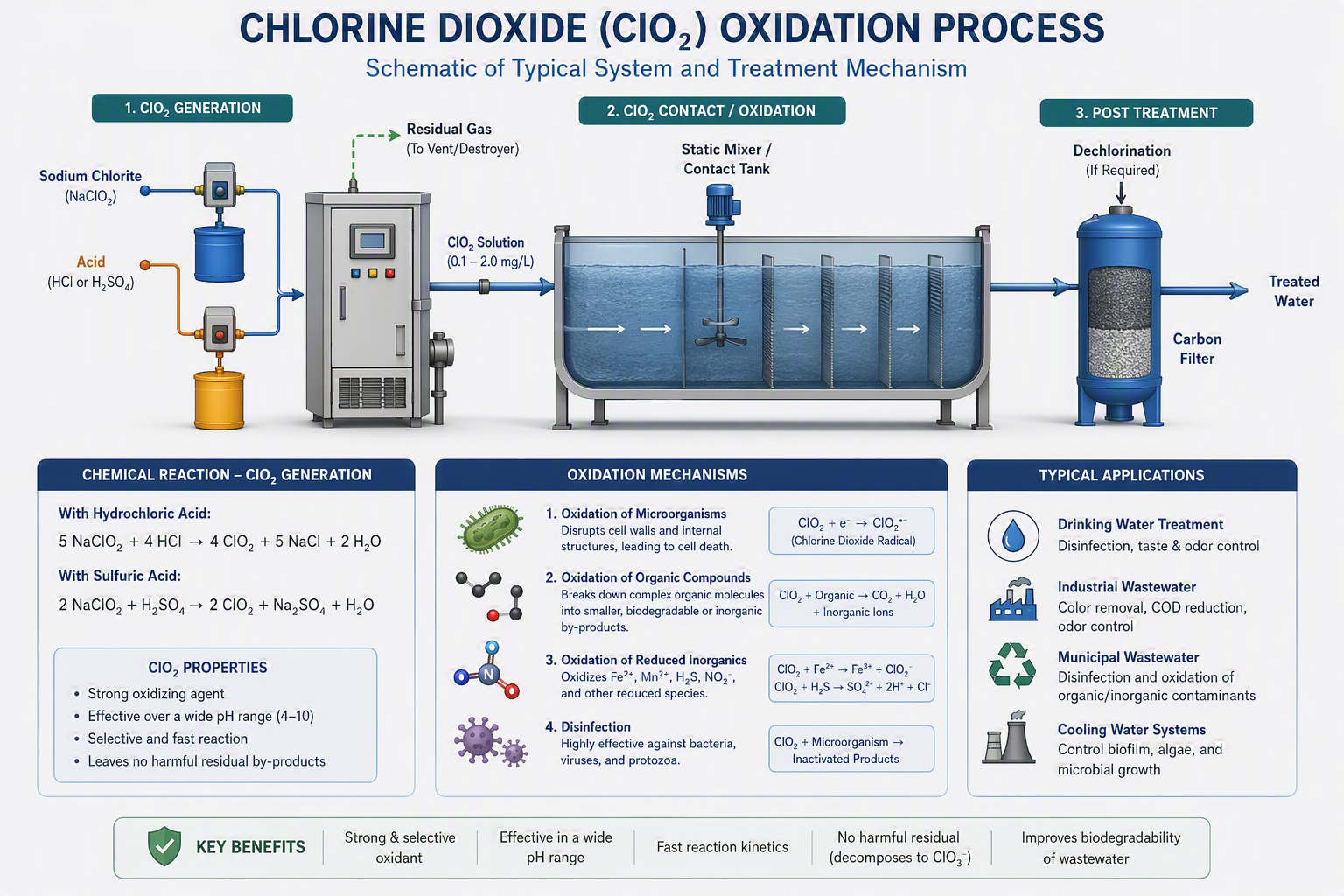
Chlorine Dioxide (ClO₂) Treatment
ClO₂A powerful selective oxidant and biocide dosed on-site — controls biofouling and oxidises sulphides without forming chlorinated by-products.
Explore technology →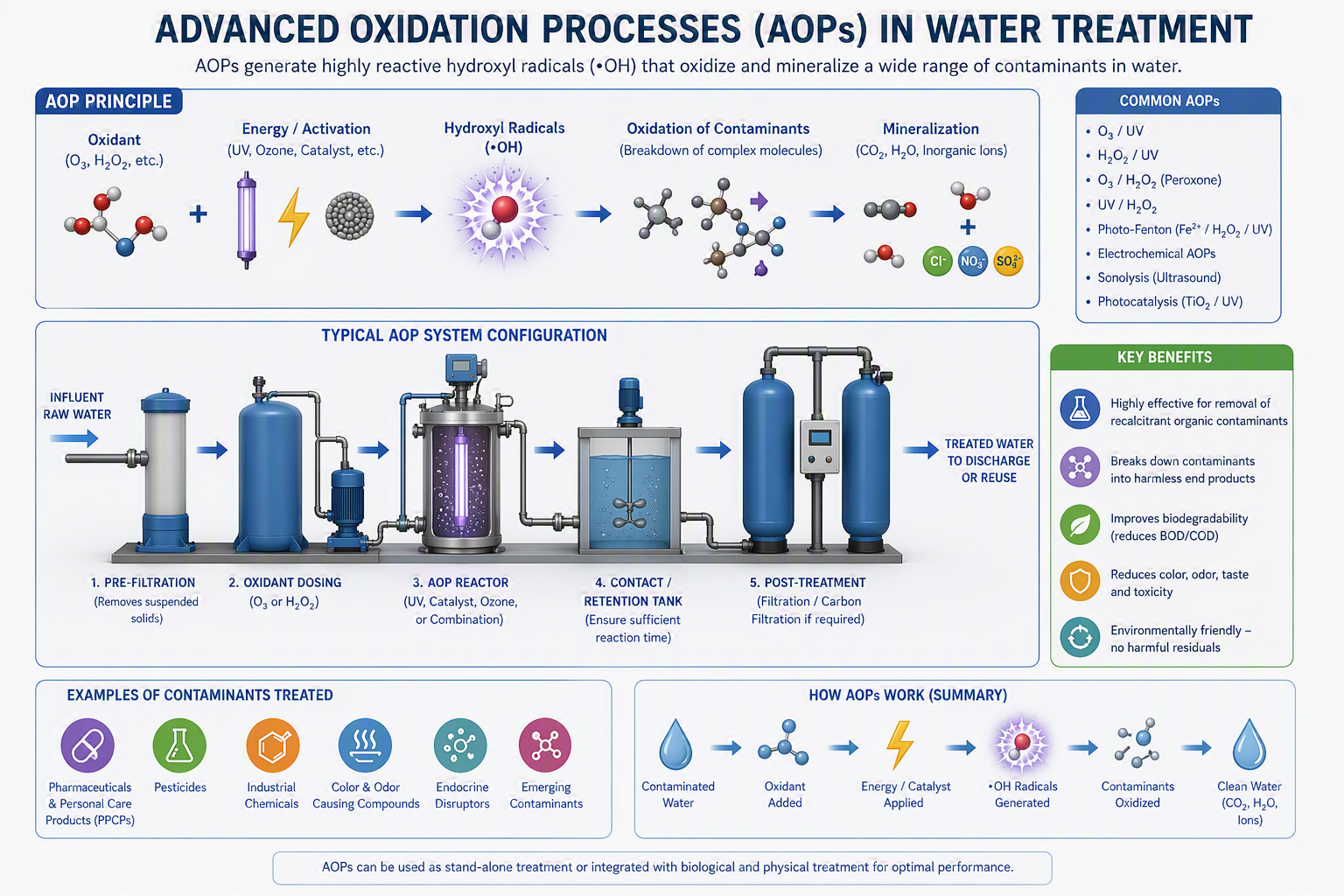 Polishing
Advanced Oxidation Processes
AOPHydroxyl-radical generation (UV/ozone/peroxide/Fenton) that destroys the most persistent organics outright — mineralising what other processes only transfer.
Explore technology →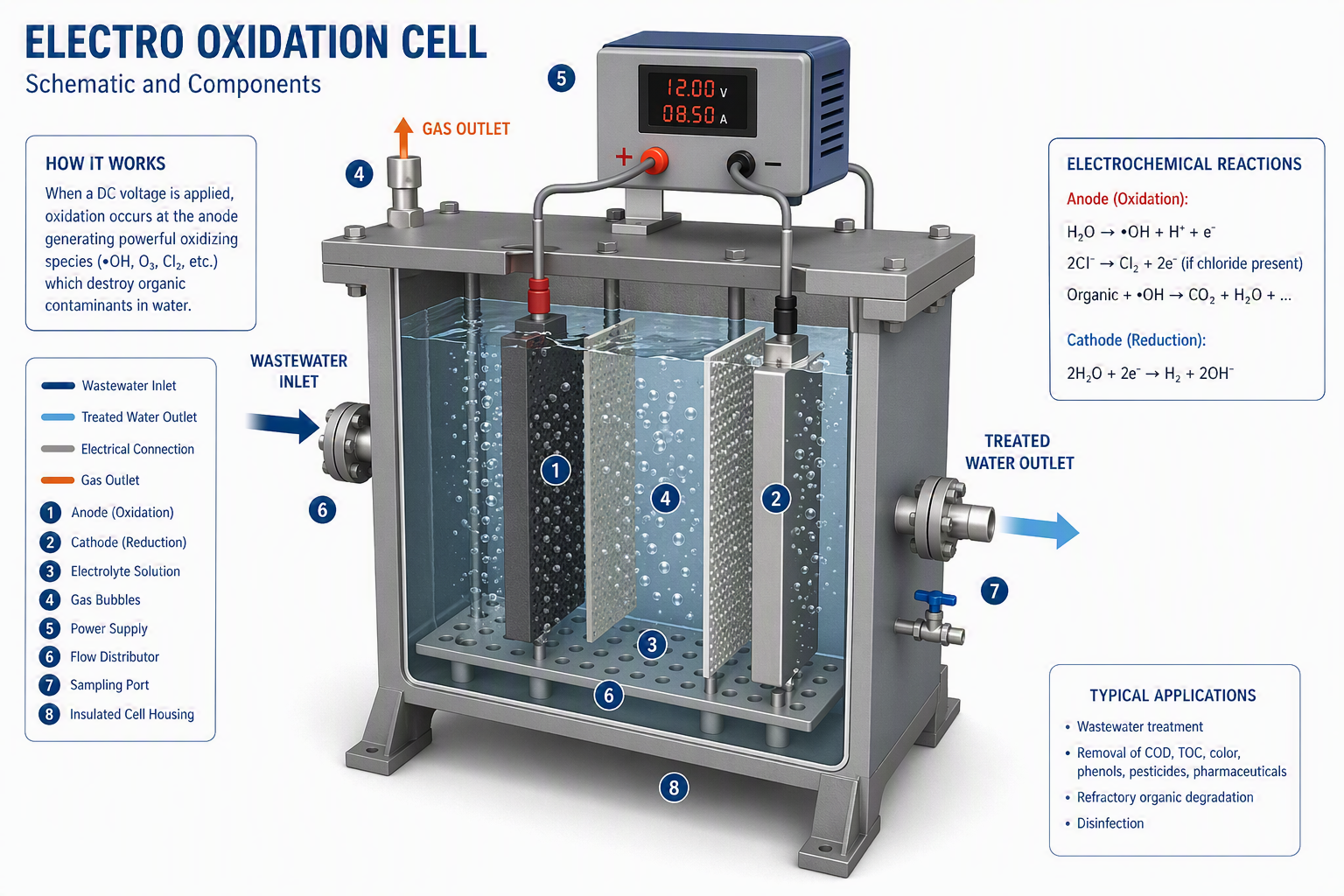 Polishing
Electro-oxidation
EODirect anodic oxidation at dimensionally stable electrodes that destroys refractory organics and ammonia in high-salinity brines — chemical-free advanced oxidation.
Explore technology →