
Electrocoagulation EC
In-situ electrochemical coagulation. Electrically dosed coagulation that breaks the toughest stable emulsions and precipitates heavy metals — without bulk chemical addition.
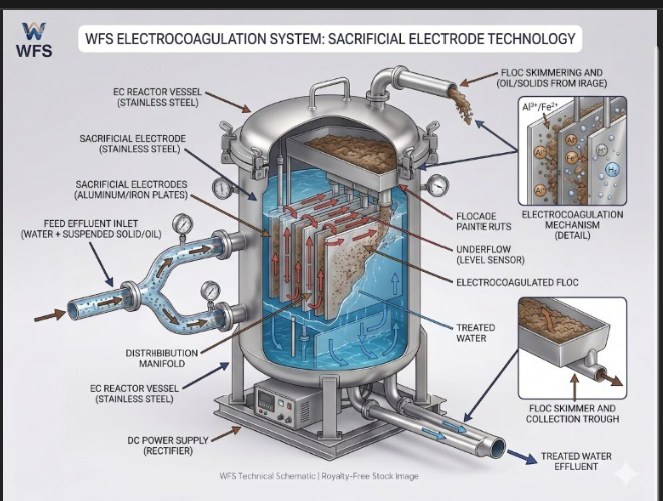
System Schematic
Representative process-flow — configured to your streamUnderlying Technology & Scientific Principle
Electrocoagulation passes DC current through sacrificial aluminium or iron anodes, electrochemically releasing metal cations that hydrolyse into active coagulant in-situ. These destabilise emulsions and colloids and co-precipitate metals — replacing dosed alum/ferric with electrically generated coagulant.
Working Mechanism
In the EC cell, anodic dissolution generates Al³⁺/Fe²⁺ that form hydroxide flocs, while cathodic hydrogen micro-bubbles provide simultaneous electroflotation. Destabilised oil, colloids and metal hydroxides aggregate and are removed by flotation and/or downstream clarification.
Separation / Removal Efficiency
Removes 90–99% of emulsified oil, fine TSS and heavy metals (As, Cr, Pb, Zn) and reduces COD; particularly effective on chemically stable, surfactant-laden emulsions resistant to conventional chemistry.
Operating Principle & Parameters
Current density 10–150 A/m²; residence 2–10 min; conductivity-dependent power. Anode passivation managed by polarity reversal and periodic cleaning; sacrificial plates consumed over time.
Flow Rates & Volumetric Capacities
Modular cells from 1 to 200+ m³/h; stacked plate packs scale throughput. Compact, skid-mounted.
Fluid Media Compatibility
Aluminium or iron electrode plates in non-conductive cells; rectifier and control panel. Suited to saline, oily, metal-bearing wastewater.
System Schematic & Process Integration
Secondary treatment after primary de-oiling, ahead of flotation/clarification, media filtration and membranes; an alternative or complement to chemical coagulation/DAF.
Options / Variations Available
Al vs. Fe electrodes; monopolar vs. bipolar stacks; integrated electroflotation; reversing-polarity anti-passivation control.
System Complexity & Automation Level
Moderate–high — current/voltage regulation on conductivity and load, automated polarity reversal and plate-wear monitoring via PLC.
Applications & Performance Delivered
Stable emulsion breaking
Treats surfactant-stabilised oily water that resists chemical demulsifiers.
Heavy-metal removal
Precipitates dissolved metals to discharge limits.
Frac-flowback & desalter brine
Reduces oil, solids and metals in complex high-strength streams.
Contaminant Removal Profile
Continue exploring the train
 Secondary
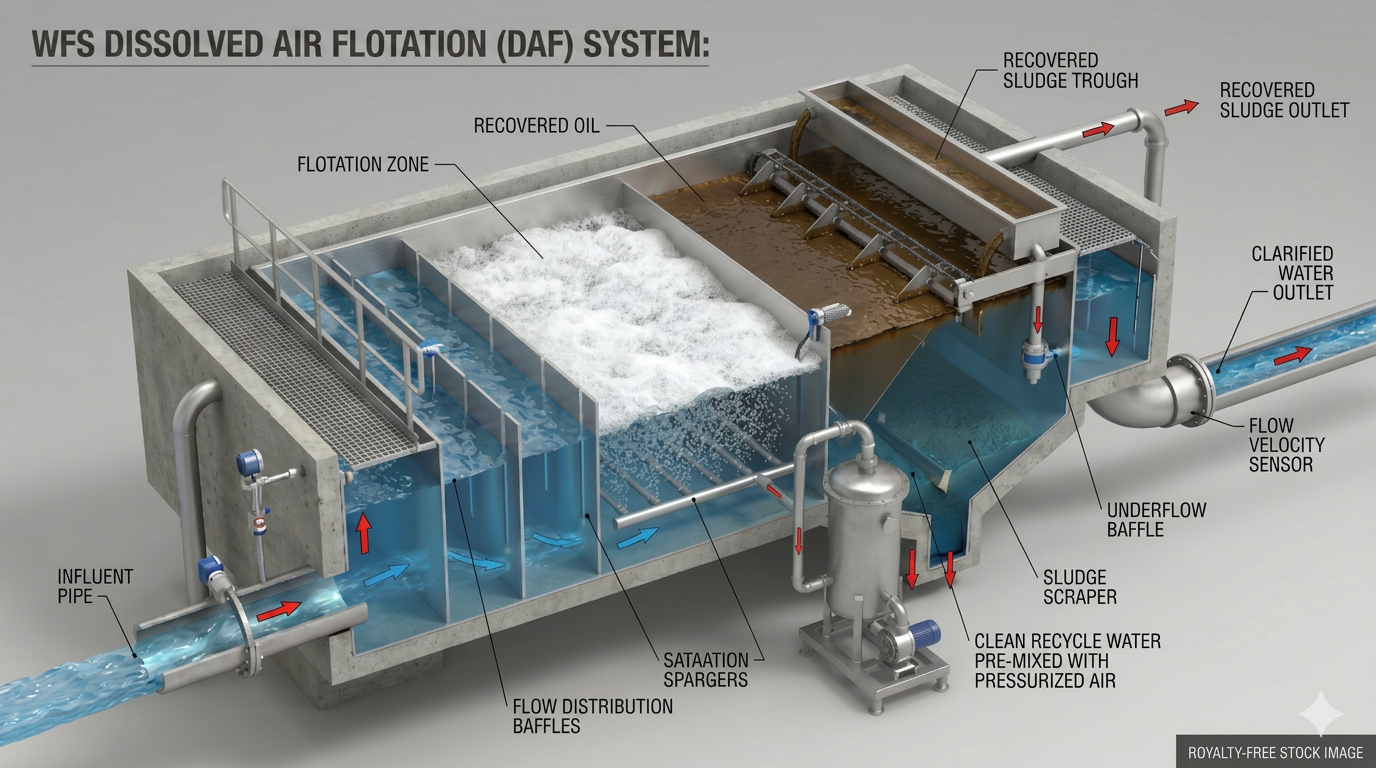
Dissolved Air Flotation
DAFMicro-bubble flotation that lifts emulsified oil, light solids and chemical floc to the surface — the workhorse secondary de-oiler for emulsified streams.
Explore technology →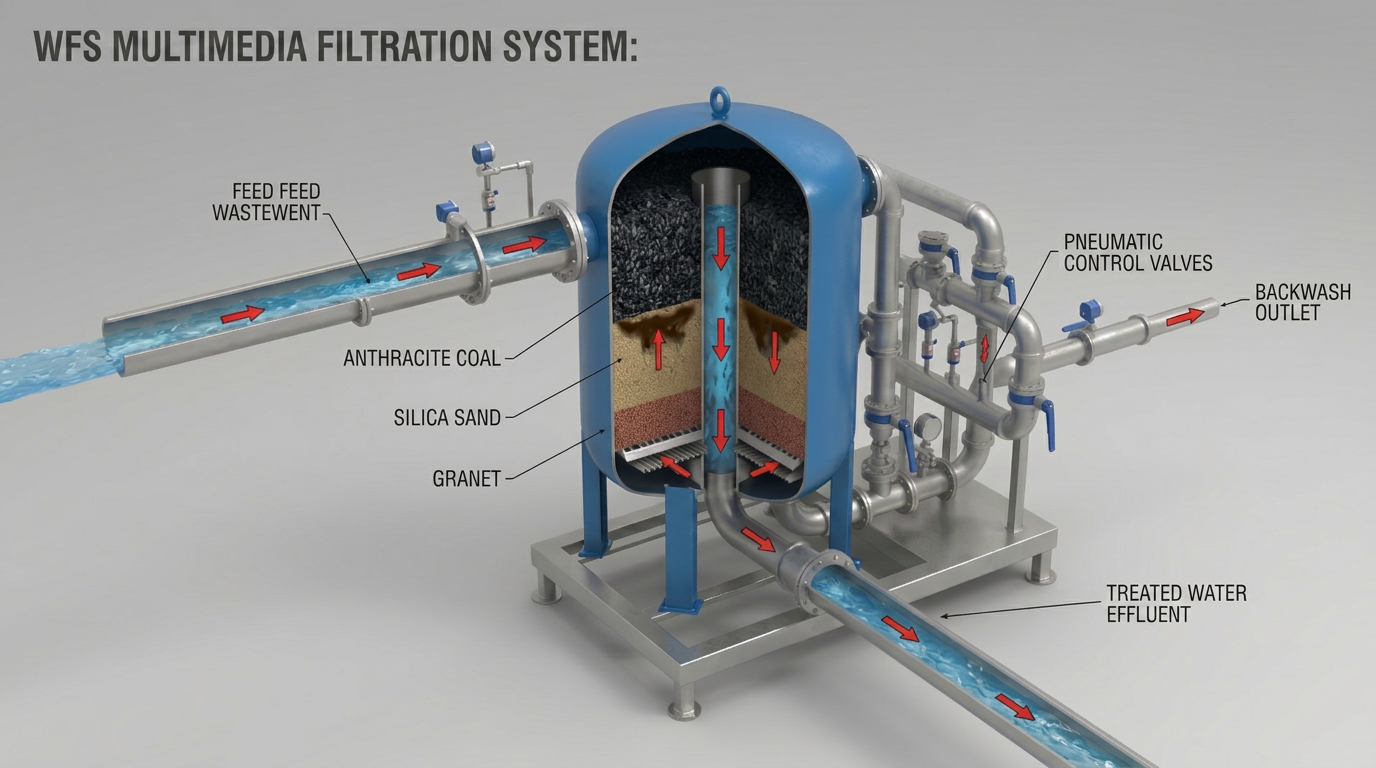 Secondary
Multimedia Filtration
MMFLayered anthracite–sand–garnet beds that strain residual suspended solids and oil to protect membranes and ion exchange downstream.
Explore technology →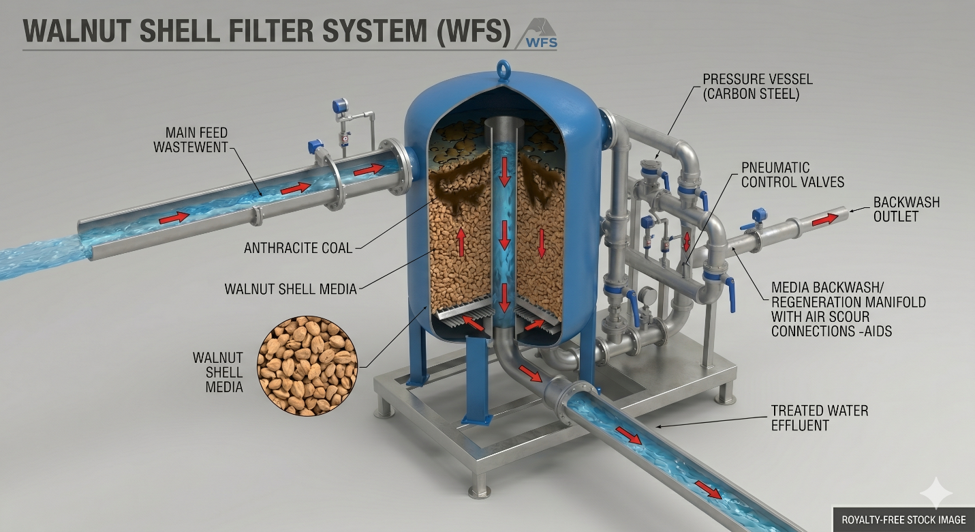 Secondary
Walnut Shell Filters
WSFDeep-bed crushed-walnut-shell media with a natural affinity for oil — the produced-water polishing filter that scrubs clean and recovers full capacity.
Explore technology →