⬛ GAC Polisher Vessel System
Granular Activated Carbon Polisher — Trace Contaminant Removal
The WFS GAC polisher is the final-polish adsorption stage for water that has already passed primary and secondary treatment. It removes trace residual contaminants of virtually any kind — residual dissolved hydrocarbons, color, T&O compounds, chlorinated solvents, MTBE, pharmaceuticals, PFAS (with specialty carbon), pesticides, and humic/fulvic acids — down to non-detect levels.
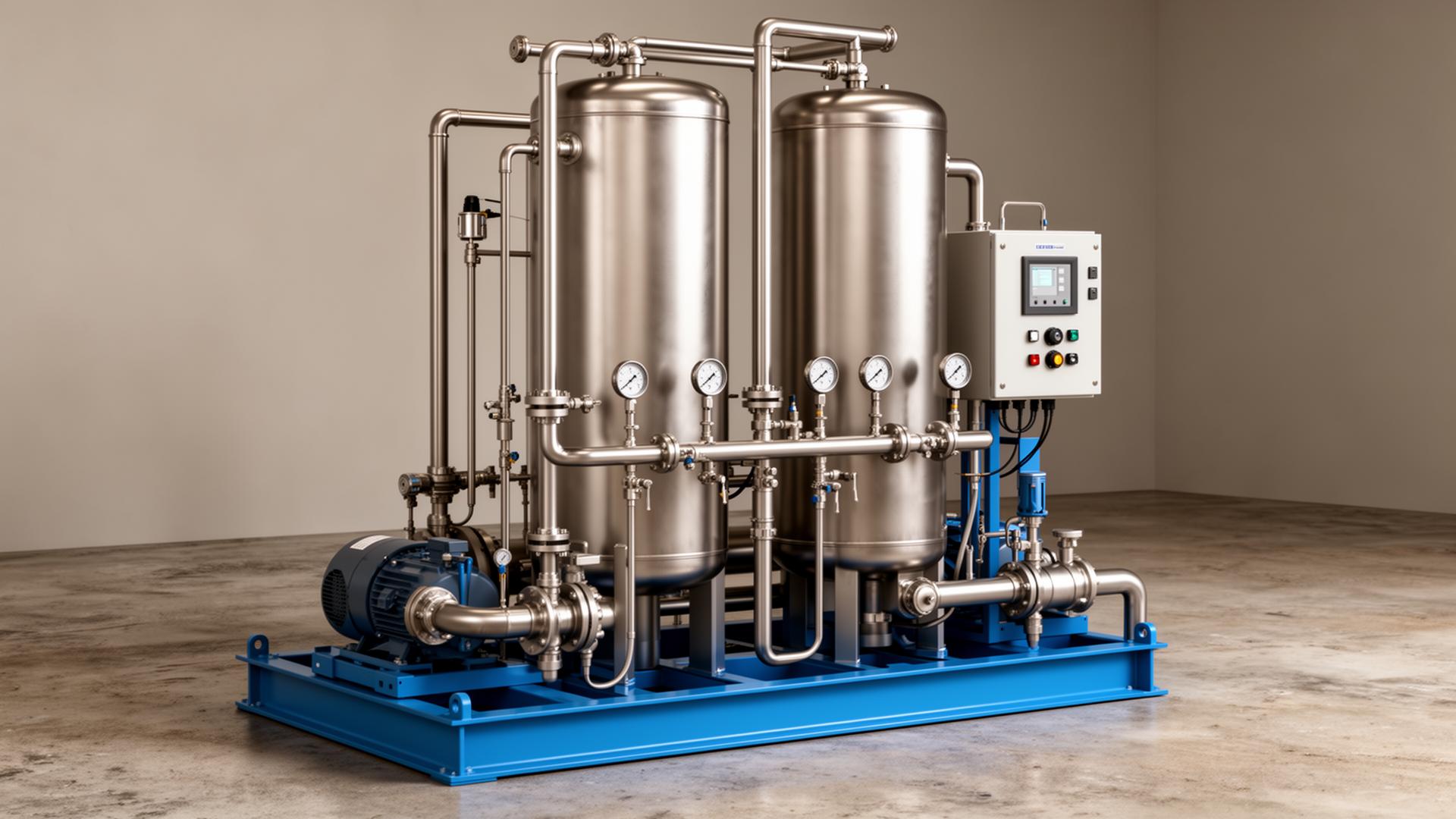
Standard configuration is two cylindrical vessels in lead-lag arrangement, with sample taps between vessels for breakthrough detection. When the lead vessel exhausts, it is rotated to lag and the freshly recharged vessel is placed in polish position. This rotation eliminates downtime during media changeout and guarantees no breakthrough to the effluent.
Vessel sizing covers 200 to 20,000 lb of GAC per vessel, with empty-bed contact times (EBCT) of 10–20 minutes for typical polishing duty. Coconut-shell carbon is standard; bituminous, reactivated, or specialty PFAS-selective carbons are available.
Full Specifications
- Flow Rate
- 1–500 m³/hr
- EBCT
- 10–20 min typical
- GAC Volume
- 200–20,000 lb / vessel
- Effluent
- Non-detect on most trace contaminants
- Configuration
- Lead-lag, optional polish vessel
- Vessel Code
- ASME VIII Div 1
- Internal Lining
- Rubber or FBE
- Underdrain
- Hub-and-lateral or strainer plate
- GAC Media
- Coconut, bituminous, reactivated, or PFAS-specialty
- Sample Taps
- Between vessels for breakthrough monitoring
- Backwash
- Optional for fines removal
- Skid Frame
- Painted CS with cartridge-change clearance
Configure your GAC Polisher Vessel System
Submit your water chemistry, flow rate, and site conditions — our engineers will return a sized configuration and process datasheet.